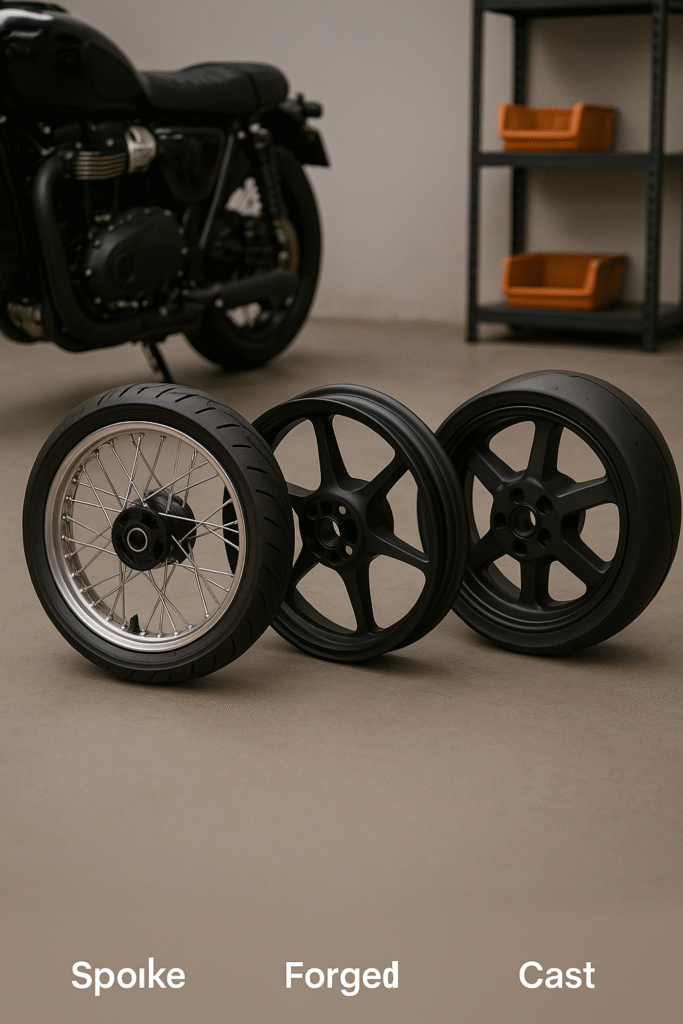
Choosing the right wheels is not only about style. The best wheel choice depends on how the bike is built, how it is ridden, and what the rider expects from handling, comfort, durability, and visual impact. That is why motorcycle wheel selection by bike type matters so much for distributors, custom shops, and wholesale buyers.
Thank you for reading this post, don't forget to subscribe!A scooter rider usually needs practical, lightweight, low-maintenance wheels for urban use. A cruiser owner often wants strong wheels with a bold visual presence and stable road manners. A performance bike rider needs wheels that reduce rotational mass, improve cornering response, and support high-speed control. When you use the same wheel logic for all three categories, you risk poor fitment, weak riding performance, and lower customer satisfaction.
This guide explains how to choose wheels for scooter, cruiser, and performance bikes with a clear, buyer-focused approach.
Why Motorcycle Wheel Selection by Bike Type Matters
Every motorcycle platform has a different geometry, weight distribution, braking setup, and riding environment. Wheel selection affects:
- Acceleration and braking response
- Cornering feel and steering precision
- Rider comfort and vibration control
- Load capacity and durability
- Brake compatibility and fitment accuracy
- The final look of the bike
For aftermarket buyers, wholesalers, and custom workshops, proper motorcycle wheel selection by bike type also helps reduce installation errors, returns, and fitment disputes. It improves trust with end customers because the wheel is chosen for function first, not only appearance.
1. How to Choose Wheels for Scooters
Scooters are designed for daily commuting, short-distance transportation, fuel efficiency, and easy handling in traffic. That means scooter wheel selection should focus on practicality.
What scooter riders usually need
Most scooter users care about:
- Lightweight handling in city traffic
- Reliable braking in stop-and-go conditions
- Easy maintenance
- Good resistance to potholes and rough urban roads
- Cost-effective replacement options
Best wheel priorities for scooters
For scooters, wheel buyers should pay close attention to the following factors:
Lightweight construction
A lighter wheel helps improve steering agility and low-speed maneuverability. This is especially important for urban scooters, where riders make frequent turns and stops.
Impact resistance
City roads can be unpredictable. Curbs, speed bumps, and poor road surfaces put extra stress on scooter wheels. Buyers should look for strong cast wheels or other durable designs that balance weight and cost.
Easy maintenance
Scooter customers often prefer simple solutions. Wheels that are easy to clean, easy to match with common tire sizes, and straightforward to install are usually better for this segment.
Correct wheel diameter
Smaller wheel diameters are common on scooters, but size should always match the vehicle’s intended use. Smaller wheels can improve agility, while larger scooter wheels may offer better stability and road absorption.
Recommended wheel type for scooters
For most scooters, cast wheels are the most practical option. They are efficient to produce, visually clean, and suitable for large-volume replacement and upgrade markets. For B2B buyers, cast scooter wheels often offer the best mix of affordability, consistency, and urban durability.
Common mistake in scooter wheel selection
A common mistake is choosing wheels based only on appearance. Heavy custom wheels may look attractive, but they can reduce agility and make the scooter feel less responsive in traffic.
2. How to Choose Wheels for Cruisers
Cruisers are different from scooters in both function and customer expectation. They are often heavier bikes built for relaxed road use, visual customization, and strong brand identity. In this category, the wheel is both a performance part and a style statement.
What cruiser riders usually need
Cruiser customers often value:
- Strong visual impact
- Stable straight-line riding
- High load support
- Long-distance comfort
- Premium finishes and custom styling
Best wheel priorities for cruisers
Strength and load capacity
Cruisers are generally heavier than scooters and often carry additional accessories or luggage. Wheel strength is critical. Buyers should confirm load ratings, hub precision, and material quality before placing bulk orders.
Style and finish options
Cruiser buyers care deeply about looks. Polished, gloss black, contrast-cut, machined, or custom-finished wheels can strongly influence purchase decisions. In the cruiser market, aesthetic appeal directly supports sales.
Stability over ultra-lightweight design
Unlike performance bikes, cruisers do not always need the lightest possible wheel. Stability, comfort, and visual presence often matter more than extreme weight reduction.
Compatibility with wide tire setups
Many cruiser builds use wider rear tires for stance and style. Wheel buyers must verify width options, offset, hub fitment, and brake clearance to avoid installation problems.
Recommended wheel type for cruisers
For cruisers, the right choice often depends on the target market:
- Cast wheels are a solid choice for cost-effective upgrades and clean modern styling.
- Forged wheels are ideal for premium cruiser builds that require stronger structure, refined finish quality, and higher-end positioning.
- Laced wheels are popular when the customer wants a traditional, classic, or vintage-inspired look.
Common mistake in cruiser wheel selection
Many buyers focus only on finish and design, then discover fitment issues later. On cruisers, backspacing, hub dimensions, brake setup, and tire matching must be checked carefully before finalizing the wheel order.
3. How to Choose Wheels for Performance Bikes
Performance bikes demand the most technical approach. In this segment, wheel choice has a direct impact on acceleration, braking, lean-in response, and high-speed control. The wrong wheel can compromise the entire riding experience.
What performance riders usually need
Performance bike customers usually look for:
- Faster turn-in response
- Reduced unsprung weight
- Better acceleration and braking
- High structural integrity
- Precision fitment for aggressive riding
Best wheel priorities for performance bikes
Low rotational mass
Lighter wheels help the bike change direction faster and reduce the effort needed for acceleration and braking. This is one of the biggest reasons performance riders upgrade wheels.
High material strength
Performance bikes place large loads on wheels during cornering, braking, and rapid speed changes. Material quality and manufacturing precision are essential.
Brake and suspension compatibility
A performance wheel must work correctly with brake discs, ABS systems, axle dimensions, spacers, and suspension geometry. Small fitment errors can create serious performance issues.
Balance between strength and weight
Going lighter is helpful, but not at the cost of reliability. Professional buyers should choose wheels that achieve a smart balance between reduced weight and real-world structural confidence.
Recommended wheel type for performance bikes
For most premium applications, forged wheels are the preferred option. They are well known for combining low weight with high strength, making them highly suitable for sport and performance-oriented motorcycles. For B2B customers serving racing-inspired builds or high-value upgrades, forged wheels are often the most compelling product category.
Common mistake in performance wheel selection
A frequent mistake is using appearance-driven custom wheels that add unnecessary weight. In performance bikes, wheel upgrades should improve function first. A visually striking wheel that hurts handling is not a true upgrade.
Comparing Wheel Selection by Bike Type
The easiest way to understand motorcycle wheel selection by bike type is to compare the main priorities side by side.
Scooters
Focus on lightweight handling, low maintenance, urban durability, and cost efficiency.
Cruisers
Focus on strength, style, finish customization, ride stability, and wide-tire compatibility.
Performance bikes
Focus on low rotational mass, high structural precision, responsive handling, and brake-fit accuracy.
This comparison helps wholesalers and custom shops recommend the right product faster and with fewer technical misunderstandings.
Key Questions to Ask Before Ordering Motorcycle Wheels
No matter which bike category you serve, asking the right questions improves selection quality.
1. What is the primary riding use?
City commuting, long-distance cruising, or aggressive sport riding all require different wheel priorities.
2. What matters more: appearance, weight, or durability?
The answer determines whether cast, forged, or laced wheels are the better fit.
3. What are the exact fitment specifications?
Always confirm wheel size, width, offset, hub dimensions, brake disc pattern, bearing size, and axle compatibility.
4. Does the customer need standard or custom configuration?
Custom finishes, unique sizes, and branding details can increase product value, but they must be managed with precise technical documentation.
5. What price segment is the customer targeting?
Entry-level replacement, mid-range customization, and premium performance upgrades should not be treated as the same market.
Best Wheel Material and Construction by Bike Type
When discussing motorcycle wheel selection by bike type, construction method is just as important as style.
Cast wheels
Best for practical applications, scalable supply, and cost-conscious markets. Commonly used for scooters and many cruiser upgrades.
Forged wheels
Best for premium applications where strength, reduced weight, and higher product value are priorities. Ideal for performance bikes and upscale cruiser projects.
Laced wheels
Best for classic styling, traditional custom builds, and selected cruiser or dual-purpose applications where appearance and ride character matter.
How B2B Buyers Can Make Better Wheel Decisions
For importers, distributors, and custom shops, wheel selection should follow a structured process:
Start with the bike type. Then confirm usage scenario. After that, review fitment data, customer expectations, finish preferences, and target price range. This approach reduces mistakes and makes recommendations more credible.
In practical B2B terms, the best supplier is not simply the one with the lowest price. The best supplier is the one that can provide consistent sizing, accurate documentation, stable quality control, and flexible customization for different motorcycle categories.
Final Thoughts
The best wheel for a scooter is usually not the best wheel for a cruiser, and it is rarely the best wheel for a performance bike. Each category has its own priorities, riding demands, and customer expectations. That is why smart buyers always approach motorcycle wheel selection by bike type with a clear technical and commercial strategy.
For scooters, focus on agility, durability, and maintenance simplicity. For cruisers, prioritize strength, style, and fitment accuracy. For performance bikes, look for lightweight strength, responsive handling, and engineering precision.
When wheel selection matches the bike type, the result is better riding performance, better product-market fit, and better long-term customer satisfaction.