
Forged vs Cast Motorcycle Wheels: Which Should You Choose?
The forged-versus-cast decision comes down to three things: strength-to-weight, cost, and how the wheels will be used. This B2B guide breaks down the real differences so brands, dealers, and custom shops can spec the right build with confidence.
Forged vs cast motorcycle wheels differ mainly in how the aluminum is shaped: a forged wheel is pressed from a solid billet under high pressure, while a cast wheel is formed by pouring molten alloy into a mold.
That single difference in process drives everything buyers care about — strength, weight, cost, and design flexibility. Understanding forged vs cast motorcycle wheels is the fastest way to match a product to a use case: a track-focused sport bike and a high-volume OEM program rarely want the same wheel. FLEXIMOTO supplies both, with forged wheels in 6061-T6 aluminum and cast wheels typically in A356.1 aluminum.
Below: a plain-English breakdown of each process, a side-by-side comparison table, guidance on how to choose, and the myths we most often clear up for buyers.
What is the difference between forged and cast wheels?
Forged wheels
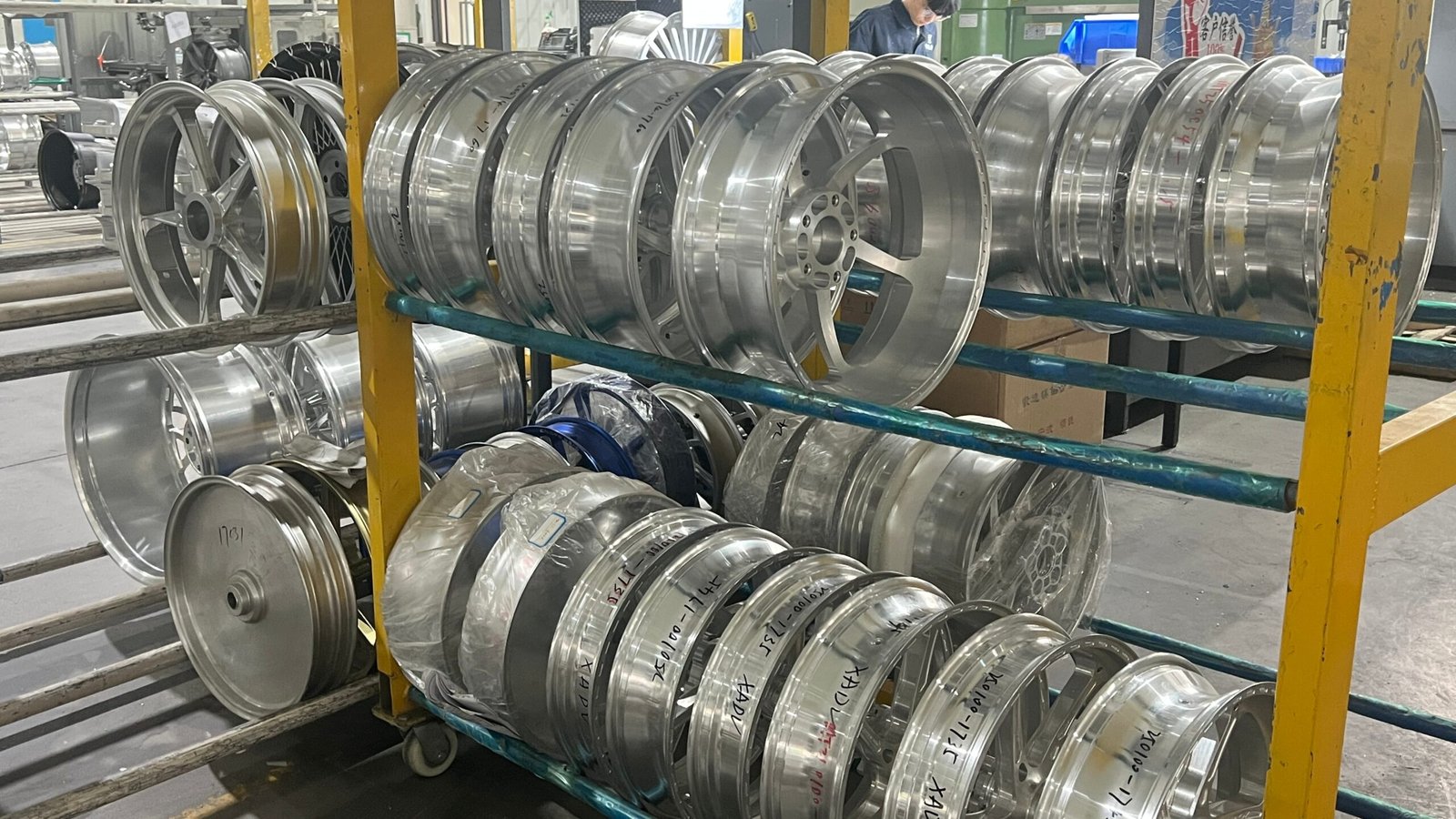
A solid aluminum billet is pressed under extreme pressure, which aligns the metal's internal grain flow and produces a dense, uniform structure. That grain alignment is why forged wheels generally offer a higher strength-to-weight ratio and better fatigue resistance. The trade-off is a more involved, more expensive process.
Cast wheels
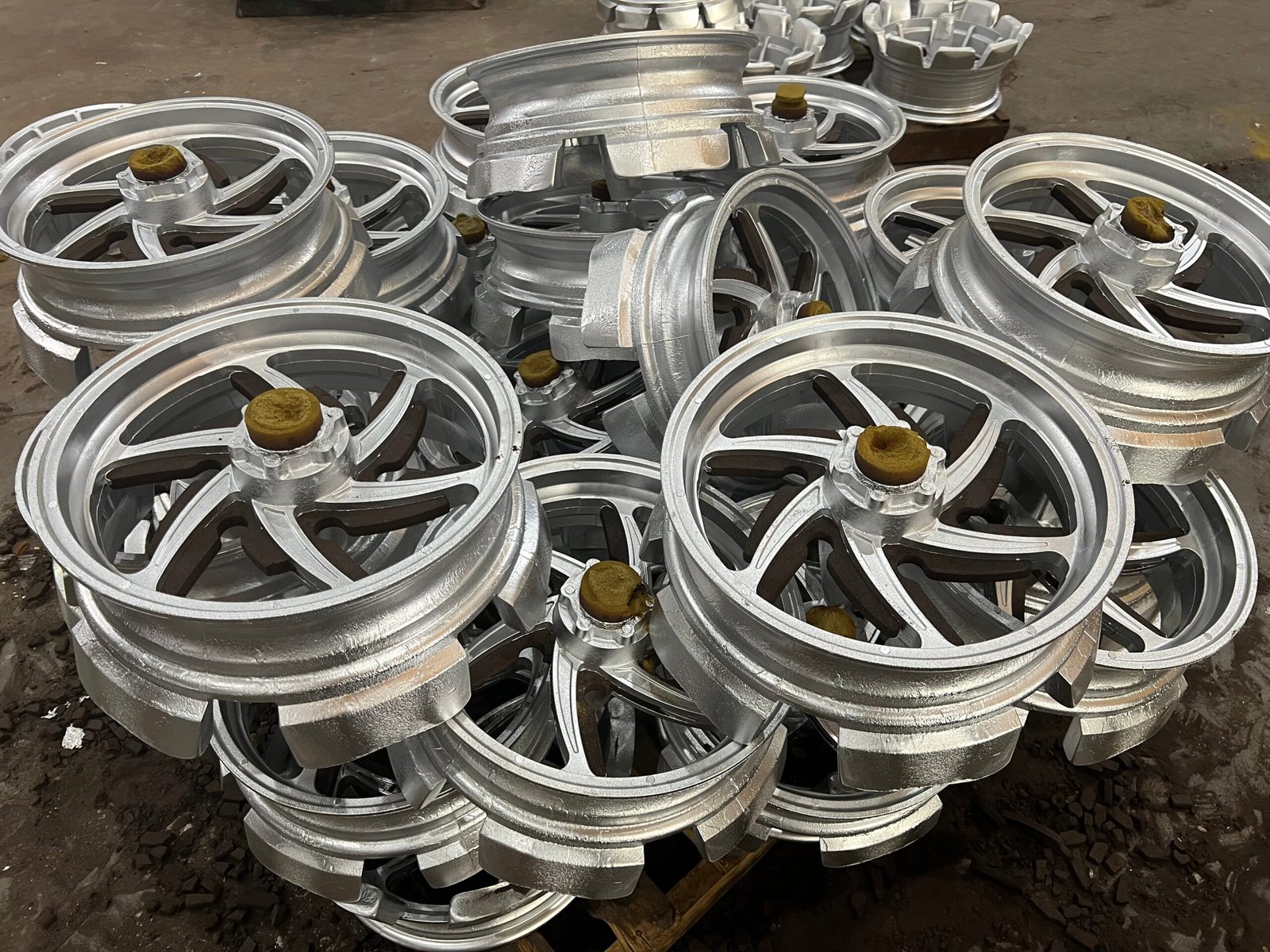
Molten aluminum alloy is poured into a mold and left to solidify. Casting reproduces complex, intricate designs easily and keeps per-unit cost low, especially at volume. Cast wheels are proven and reliable; for the same strength they tend to be slightly heavier than forged, and the process leaves less room for the fine grain structure forging creates.
Forged vs cast motorcycle wheels: side-by-side comparison
This table summarizes the general engineering trade-offs and how each maps to a FLEXIMOTO wheel.
| Attribute | Forged wheels | Cast wheels |
|---|---|---|
| Process | Solid billet pressed under high pressure | Molten alloy poured into a mold |
| Typical material | 6061-T6 aluminum | A356.1 aluminum (typical) |
| Grain structure | Aligned, dense, uniform | Solidified cast structure |
| Strength-to-weight | Higher | Good, slightly lower for equal weight |
| Weight (equal strength) | Lighter | Slightly heavier |
| Fatigue resistance | Higher | Good |
| Design flexibility | Refined via machining | Excellent for intricate cast shapes |
| Relative cost | Higher | More cost-effective |
| Best suited to | Sport, track, premium street | OEM-style, higher-volume programs |
| FLEXIMOTO page | Forged wheels | Cast wheels |
When forged wheels are the right call
Forged wheels are the benchmark when performance leads the spec. Because forging aligns the grain and removes internal voids, the result is a strong, fatigue-resistant wheel that can be built lighter for the same strength — sharpening acceleration, braking, and handling by cutting rotating and unsprung mass.
Choose forged when your catalog targets sport bikes, track use, or premium street builds where riders will notice the handling difference and pay for it. FLEXIMOTO forged wheels are produced in 6061-T6 aluminum; for the absolute lightest option, magnesium forged wheels go a step further for racing. See the full range on the forged motorcycle wheels page.
When cast wheels make more sense
Cast wheels are the practical, cost-effective choice — and often the smarter business decision. Casting reproduces complex, OEM-style designs consistently and keeps per-unit cost down, which matters most on higher-volume programs where value and repeatability outweigh the marginal weight savings of forging.
Choose cast when you're serving OEM-style styling, dealer volume, or price-sensitive segments. FLEXIMOTO cast wheels typically use A356.1 aluminum, a casting alloy chosen for its castability, corrosion resistance, and consistent quality after heat treatment. Explore options on the cast motorcycle wheels page.
How do I choose between forged and cast wheels?
Decide by how the wheels will be used and sold, not by prestige alone:
- Lead with performance? → forged, for the best strength-to-weight (sport, track, premium street).
- Lead with cost and volume? → cast, for repeatable, budget-friendly production (OEM-style, dealer volume).
- Need the absolute lightest? → step up to magnesium forged for racing.
- Weighing spoked options too? → see laced vs cast wheels for cruiser and adventure builds.
Still unsure? Tell us your bike models, target segment, and budget, and we'll recommend forged or cast — then send a custom quote within 48 hours. For a wider material view, read the wheel materials guide.
Common myths about forged and cast wheels
- "Cast wheels are weak." Not true — cast wheels are proven and reliable, and the right choice for many programs. The real question is the use case, not the label.
- "Forged is always worth it." Only if the customer benefits from the weight and performance. On volume or price-led products, that premium can be hard to justify.
- "Forged and cast look different, so buyers can tell quality by eye." Finish and design dominate the look; the real difference is in the metal's structure, not the styling.
- "Material choice is separate from process." They work together — the alloy and how it's shaped both matter, which is why we confirm both on the spec sheet.
Forged vs cast wheels: frequently asked questions
What is the difference between forged and cast motorcycle wheels?
A forged wheel is pressed from a solid aluminum billet under high pressure, which aligns the grain for a strong, light structure. A cast wheel is formed by pouring molten alloy into a mold, which is more cost-effective and better for complex, high-volume designs.
Are forged wheels stronger than cast wheels?
Forging aligns the metal's grain structure, which generally gives higher strength and fatigue resistance than casting for the same weight. Cast wheels remain strong and reliable — they're a deliberate choice for volume and OEM-style work.
Are forged wheels lighter than cast wheels?
Generally yes. For equivalent strength, forged wheels can be built lighter, which reduces rotating and unsprung mass and sharpens handling. This is why forged is favored for sport and track applications.
Are cast wheels bad or low quality?
No. Cast wheels are proven, reliable, and cost-effective, and they excel at reproducing intricate OEM-style designs at volume. For many programs, cast is the smarter business choice.
What materials does FLEXIMOTO use for forged and cast wheels?
FLEXIMOTO forged wheels are produced in 6061-T6 aluminum. Cast wheels typically use A356.1 aluminum. Final materials are confirmed on each project's spec sheet.
Are forged wheels worth the extra cost?
It depends on the application. For performance-led sport and track builds where riders value lower weight and sharper handling, forged is often worth it. For volume or price-sensitive programs, cast usually delivers better value.
How fast can I get a quote?
FLEXIMOTO provides a custom quote within 48 hours of your request. Share your bike models, wheel type, size, finish, and quantity to get started.
Forged or cast — we'll help you spec the right one
Tell us your models, target segment, and budget. We'll recommend forged or cast and send a custom B2B quote within 48 hours — single sets or bulk.
I'm a: motorcycle brand · dealer / distributor · custom / tuning shop · OEM / private label
Shapingba District, Chongqing, China · +86 23 6521 0107 · jackie.wei@fleximotoracing.com
*2,120+ businesses across 96 countries is FLEXIMOTO's own site claim.