
Motorcycle Wheel Materials: Aluminum, Magnesium & Steel
Choosing the wrong wheel material can mean paying for weight you don't need — or losing durability where it counts. This B2B guide compares the metals behind forged, cast, laced, and magnesium wheels so brands, dealers, and custom shops can spec the right build with confidence.
A motorcycle wheel material is the base metal — most often an aluminum alloy, magnesium, or steel — that determines how light, strong, corrosion-resistant, and durable the finished wheel will be.
The same wheel design can behave very differently depending on the metal it's built from and how that metal is shaped. For B2B buyers, understanding motorcycle wheel materials is the fastest way to match a product to a use case — sport, racing, cruiser, or high-volume OEM — without over-spending or under-building. At FLEXIMOTO, forged wheels are produced in 6061-T6 aluminum, with cast, laced (spoked), and magnesium forged options for different segments.
Below you'll find a side-by-side comparison table, a plain-English breakdown of each material, guidance on how to choose, and the mistakes we most often help buyers avoid.
What determines the right wheel material?
Four factors decide which metal is right for a given order:
- Weight target. Lighter wheels reduce rotating and unsprung mass, which sharpens acceleration, braking, and handling — critical for sport and race builds, less so for touring or volume programs.
- Strength and fatigue life. How the metal is formed (forged vs cast) matters as much as the metal itself, because it changes the internal grain structure and fatigue resistance.
- Riding type and bike segment. A track bike, a cruiser, and an adventure bike have very different priorities for stiffness, repairability, and looks.
- Budget and volume. Some materials and processes cost more per wheel but pay off in performance; others are built for cost-effective, higher-volume runs.
Get these four right and the material almost picks itself — which is exactly what the comparison below is designed to help you do.
Motorcycle wheel materials compared
This table summarizes the common wheel metals, their general engineering properties, and the FLEXIMOTO wheel type each one maps to.
| Material & form | Typical density* | Key characteristics | Best suited to | FLEXIMOTO wheel type |
|---|---|---|---|---|
| 6061-T6 aluminum — forged | ~2.70 g/cm³ | Excellent strength-to-weight; refined grain from forging improves fatigue resistance | Sport, track, premium street | Forged wheels |
| AZ80 magnesium — forged | ~1.74–1.80 g/cm³ | Lightest common wheel metal; lowest rotating mass; needs proper finishing for corrosion protection | Racing, ultra-light builds | Magnesium forged wheels |
| A356.1 aluminum — cast | ~2.70 g/cm³ | Cost-effective, allows complex shapes, well-suited to higher volumes | OEM-style, volume programs | Cast wheels |
| 7-series aluminum rim + stainless-steel spokes — laced | steel ~7.85 g/cm³ (spokes) | Flexible, repairable, classic look; supports tube or tubeless setups | Cruiser, adventure, classic | Laced (spoked) wheels |
Forged aluminum (6061-T6): the strength-to-weight benchmark
Forged aluminum is made by pressing a solid billet under high pressure, which aligns the metal's grain flow and produces a dense, fatigue-resistant structure. Compared with casting, forging generally yields a stronger wheel at the same weight — or the same strength at lower weight.
FLEXIMOTO's forged wheels use 6061-T6 aluminum, a heat-treated alloy widely trusted in performance wheels for its balance of strength, toughness, and finish quality. It's the default choice for sport and track programs where handling response matters. See the full range on the forged motorcycle wheels page, or compare processes in our forged vs cast wheels guide.
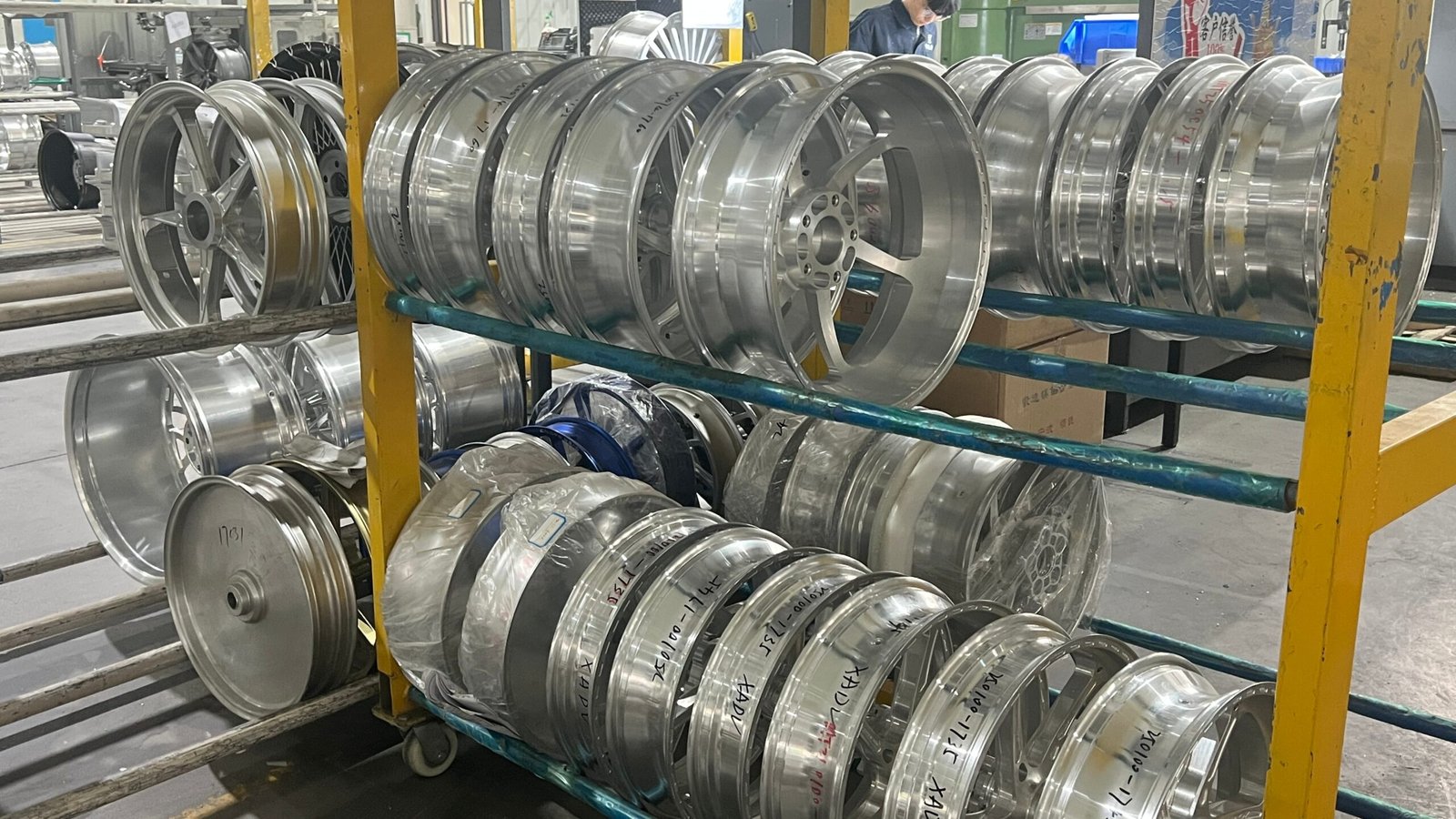
Magnesium: the lightest option for racing
Magnesium is the lightest metal in common wheel use — roughly a third lighter than aluminum by volume — which is why it dominates in racing and ultra-light builds. Lower rotating mass improves acceleration and agility, but magnesium needs proper coatings and care to manage corrosion, so it's usually specified for performance-first applications rather than everyday touring.
FLEXIMOTO’s magnesium forged wheels are typically produced in AZ80 magnesium alloy, a high-strength wrought grade well suited to forging — for teams and brands chasing the lowest possible weight.
Cast aluminum: cost-effective and volume-ready
Cast aluminum wheels are formed by pouring molten alloy into a mold, which makes complex designs easy to reproduce and keeps per-unit cost down at scale. FLEXIMOTO cast wheels typically use A356.1 aluminum, a casting alloy widely used in wheels for its castability, corrosion resistance, and consistent quality after heat treatment. Cast wheels are the practical choice for OEM-style styling and higher-volume orders where value and repeatability outweigh the marginal weight savings of forging. Explore the range on the cast motorcycle wheels page.
Laced (spoked) wheels: classic look, real-world durability
Laced wheels combine a rim with tensioned spokes. FLEXIMOTO laced wheels are typically built with a 7-series (7000-series) aluminum alloy rim laced with stainless-steel spokes, with other spoke materials available on request. The spoked structure flexes to absorb impacts, is field-repairable, and delivers the classic look expected on cruisers, adventure bikes, and heritage builds. Lacing patterns can be customized. See options on the laced motorcycle wheels page.
Final rim and spoke materials are confirmed on each project’s spec sheet — request it with your quote.
How do I choose the right motorcycle wheel material?
Match the material to how the bikes will actually be used and sold:
- Sport & track brands → forged 6061-T6 aluminum for the best all-round strength-to-weight.
- Racing teams & ultra-light builds → magnesium forged for the lowest rotating mass.
- OEM-style & higher-volume programs → cast aluminum for cost-effective, repeatable production.
- Cruiser, adventure & classic → laced (spoked) wheels for the traditional look, flex, and repairability.
Not sure which fits your catalog? Tell us your bike models and target segment and we'll recommend a material and build — then send a custom quote within 48 hours.
Common mistakes buyers make with wheel materials
- Over-speccing magnesium. If a bike isn't chasing lap times, forged aluminum usually delivers the durability and value the customer actually needs.
- Assuming "cast" means "weak." Cast wheels are a deliberate, sound choice for OEM-style and volume work — the right question is the use case, not the prestige.
- Ignoring finish and corrosion. The right coating or anodizing protects the metal and the look; this matters most on magnesium and in humid or coastal markets.
- Mismatching material to riding type. A stiff forged sport wheel and a flexible laced adventure wheel solve different problems — pick by application.
- Skipping the spec sheet. Confirm dimensions, finish, and material in writing before production to avoid surprises at delivery.
Material is only the start: finishes & customization
Once the base material is chosen, FLEXIMOTO can tailor the wheel to your brand. Customization options include:
- Custom dimensions (diameter and width) to match your models
- Finishes, including anodizing, for both protection and appearance
- Custom spoke designs and lacing patterns
- Engraved / laser-etched logos for private-label and OEM branding
A downloadable spec catalog is available so your team can review options before committing. Every custom wheel is backed by a warranty, and orders move through a tracked process — 3D renderings, production, testing, packing, customs clearance, and shipping.
Motorcycle wheel materials: frequently asked questions
What is the best material for motorcycle wheels?
There is no single best material — it depends on use. Forged 6061-T6 aluminum offers the best all-round strength-to-weight for sport and street, magnesium is the lightest for racing, cast A356.1 aluminum is the most cost-effective for volume, and laced wheels (7-series aluminum rim with stainless-steel spokes) suit cruisers and adventure bikes.
Are forged aluminum wheels stronger than cast wheels?
Forging aligns the metal's grain structure under pressure, which generally gives higher strength and fatigue resistance than casting for the same weight. Cast wheels remain a strong, economical choice for complex designs and higher volumes.
Why are magnesium wheels used in racing?
Magnesium is the lightest metal in common wheel use — roughly 2.70 g/cm³ for aluminum versus about 1.74 g/cm³ for magnesium — so it reduces rotating and unsprung mass. That improves acceleration, braking, and agility, which matters most on the track.
What materials does FLEXIMOTO use for its wheels?
FLEXIMOTO forged wheels are produced in 6061-T6 aluminum. Cast wheels typically use A356.1 aluminum, magnesium forged wheels typically use AZ80 alloy, and laced wheels typically pair a 7-series aluminum rim with stainless-steel spokes. Final materials are confirmed on each project's spec sheet.
Can I customize the material and finish of my wheels?
Yes. FLEXIMOTO offers custom dimensions, finishes including anodizing, spoke designs, and engraved logos across forged, cast, laced, and magnesium wheels. A spec catalog is available to download, and all custom wheels come with a warranty.
How fast can I get a quote?
FLEXIMOTO provides a custom quote within 48 hours of your request. Share your bike models, wheel type, size, finish, and quantity to get started.
Spec the right wheel material for your bikes
Tell us your models and target segment. We'll recommend the right material and build, then send a custom B2B quote within 48 hours — single sets or bulk.
I'm a: motorcycle brand · dealer / distributor · custom / tuning shop · OEM / private label
Shapingba District, Chongqing, China · +86 23 6521 0107 · jackie.wei@fleximotoracing.com
*2,120+ businesses across 96 countries is FLEXIMOTO's own site claim.