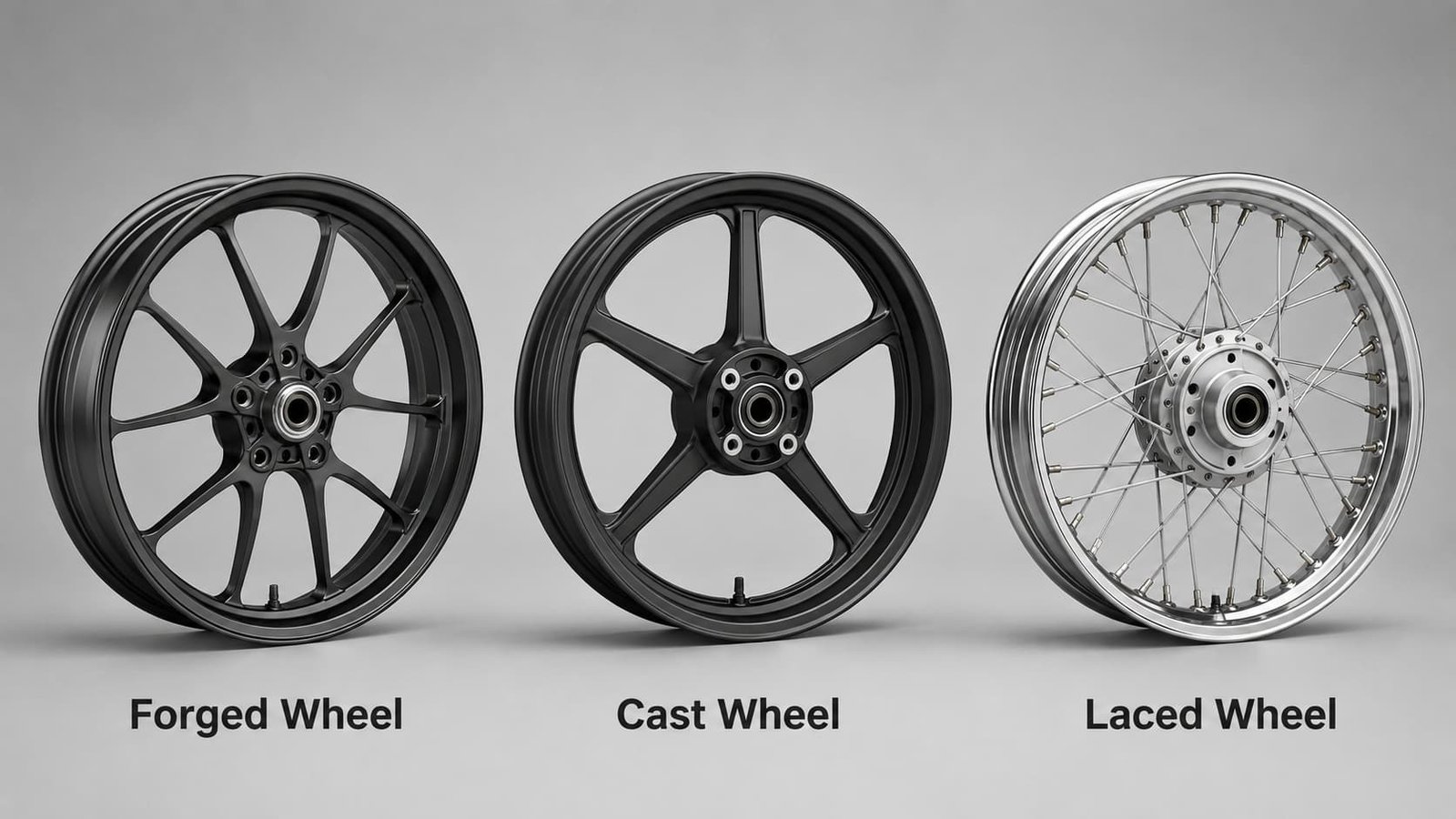
For most B2B motorcycle programs, forged wheels deliver the best strength-to-weight ratio and the highest margin per unit, cast wheels give the lowest cost at high volume, and laced (spoked) wheels remain the choice for adventure and heritage builds — so the right pick depends on whether your buyers prioritize weight, price, or off-road and classic styling.
If you sell, distribute, or build motorcycles, “forged vs cast vs laced” is really a stocking decision, not just an engineering one. Each construction method serves a different customer, carries a different cost structure, and turns over at a different margin. This guide breaks down how the three are made, compares them on the factors that matter to a buyer, and shows which to stock for which market — so you can quote and order with confidence.
The Short Answer (TL;DR)
Choose forged when customers want the lightest, strongest wheel and will pay for performance or a premium custom look (sportbikes, high-end cruisers). Choose cast when you need consistent designs at the lowest unit cost for higher-volume, price-sensitive sales. Choose laced when you serve adventure, dual-sport, scrambler, or classic/cruiser riders who need impact-absorbing, rebuildable, or tubeless spoked wheels. Many dealers stock a mix and let demand decide.
Forged vs Cast vs Laced: How They’re Made
The manufacturing method is the root of every difference in weight, strength, cost, and lead time. Understanding it makes your sourcing conversations far easier.
Forged wheels
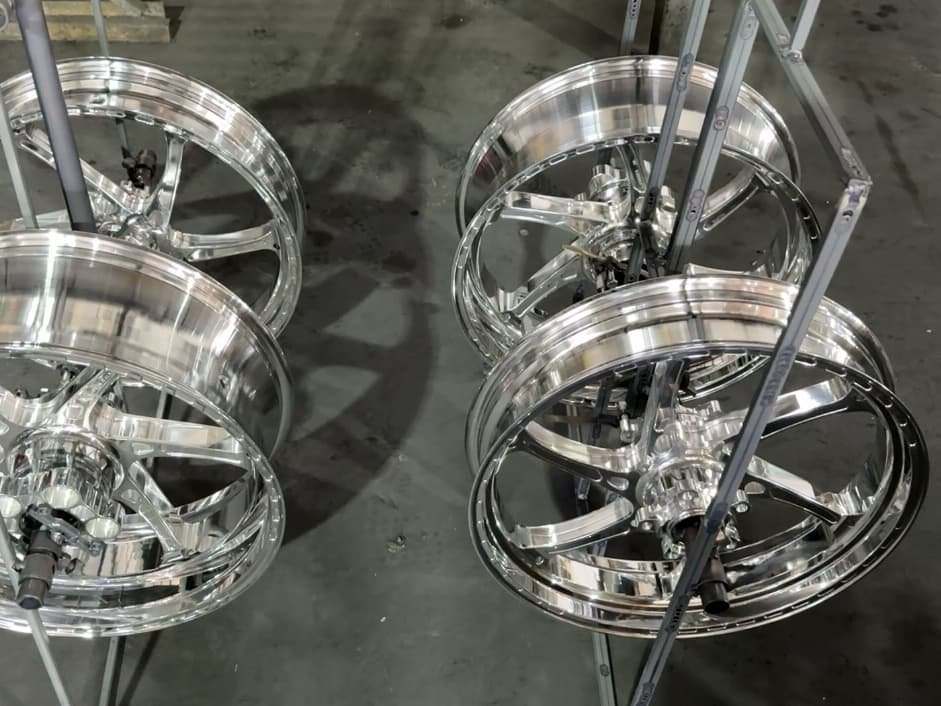
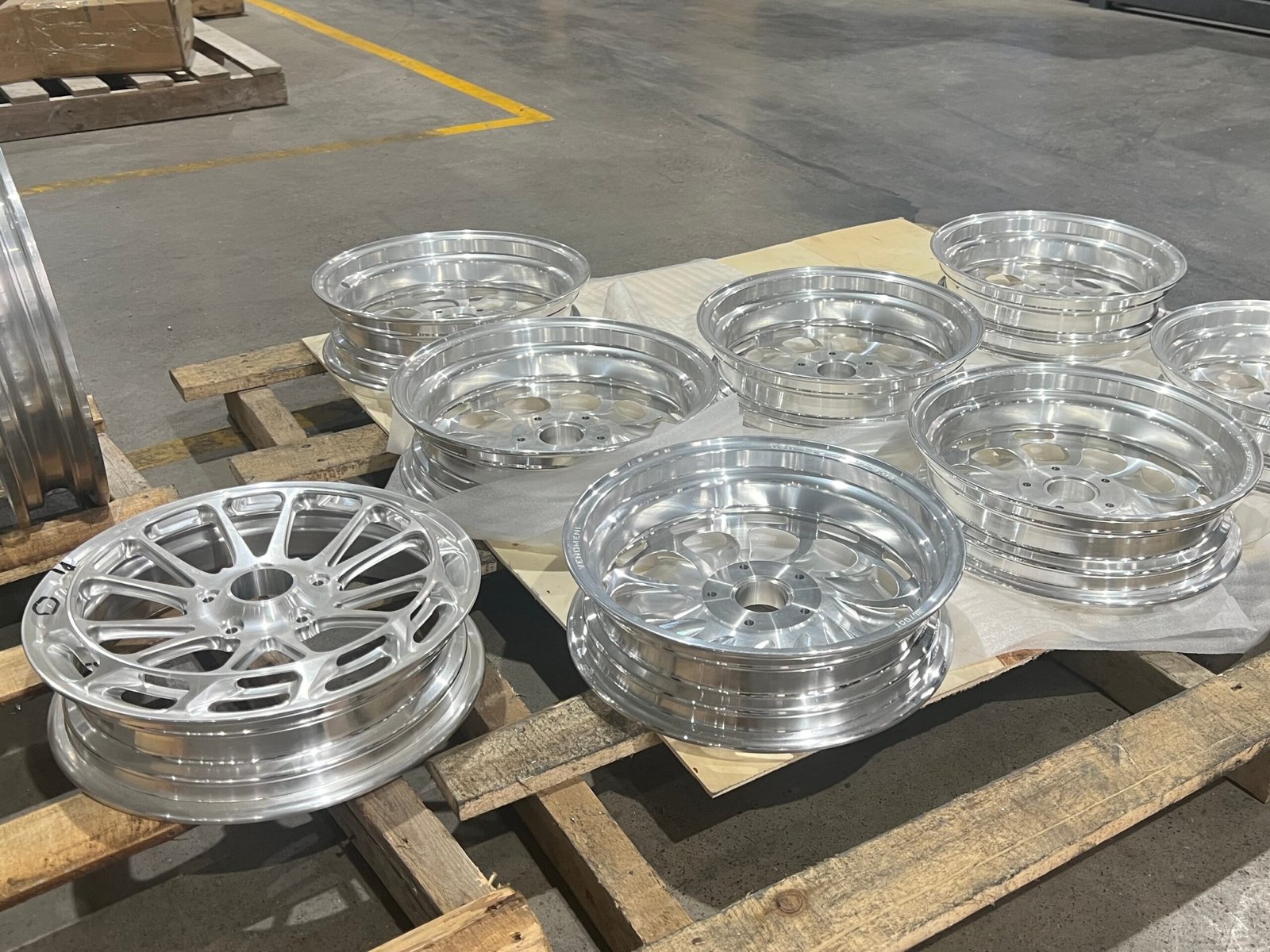
A solid billet of aluminum — typically 6061-T6 — is compressed under extreme pressure, then CNC-machined to final shape. The forging process aligns the metal’s grain flow, producing a dense, void-free structure that is the strongest and lightest option in this comparison. Forged wheels suit performance and premium custom buyers and offer the widest scope for one-off designs. See our forged motorcycle wheels range for reference.
Cast wheels
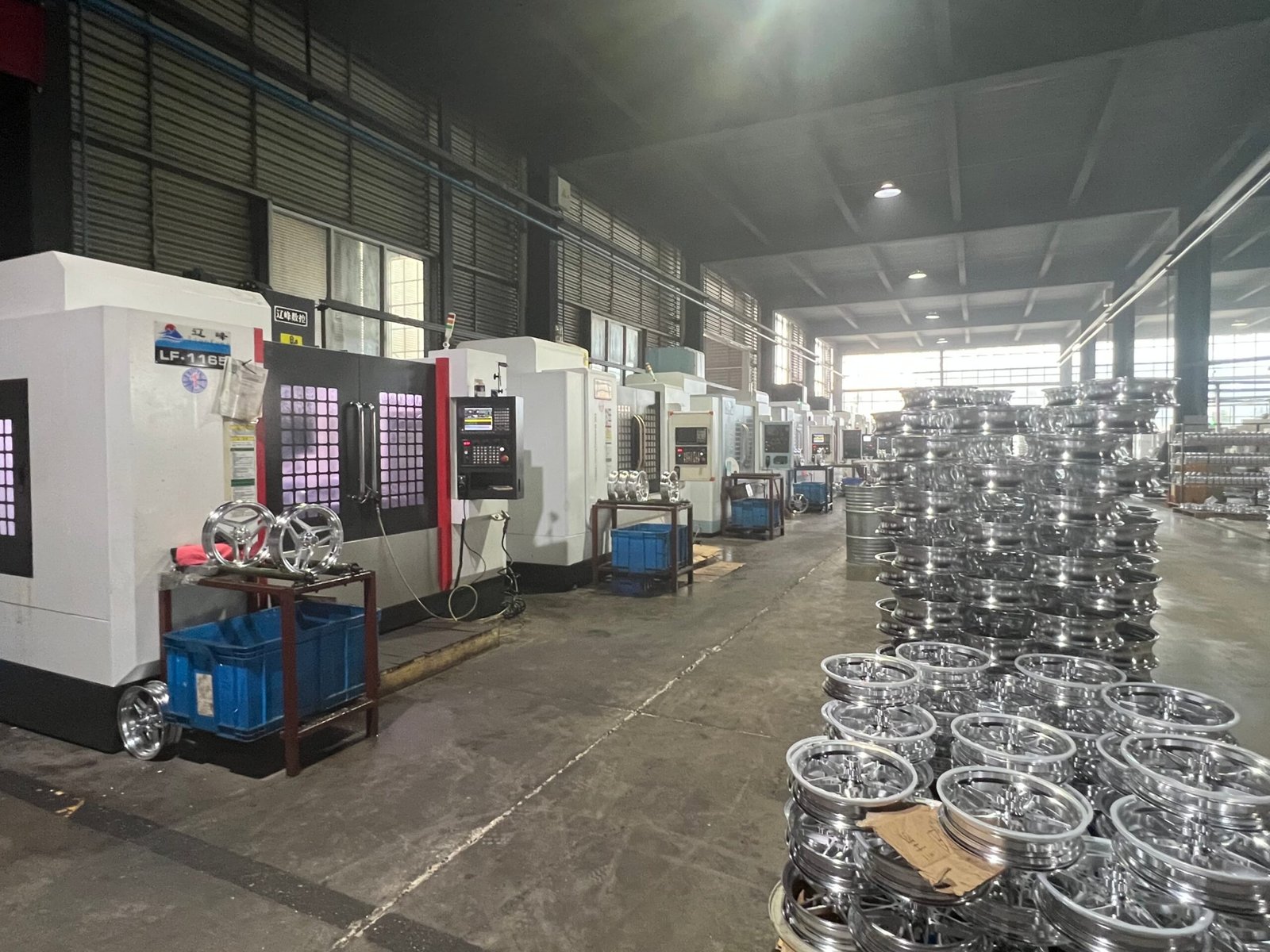
Molten aluminum is poured into a mold and allowed to solidify. Casting is efficient and repeatable, which makes it the most economical method once volume rises and the tooling cost is spread across many units. Cast wheels are heavier than forged and can be more prone to internal porosity, but for standardized designs sold at scale, they are hard to beat on price.
Laced (spoked) wheels
A separate rim, hub, and tensioned spokes are assembled by hand. The spoke structure flexes under load, absorbing impacts that would stress a rigid wheel — ideal for off-road and adventure use — and individual spokes or rims can be replaced rather than scrapping the whole wheel. Tubeless laced options are also available for ADV touring. See our laced motorcycle wheels for the construction in detail.
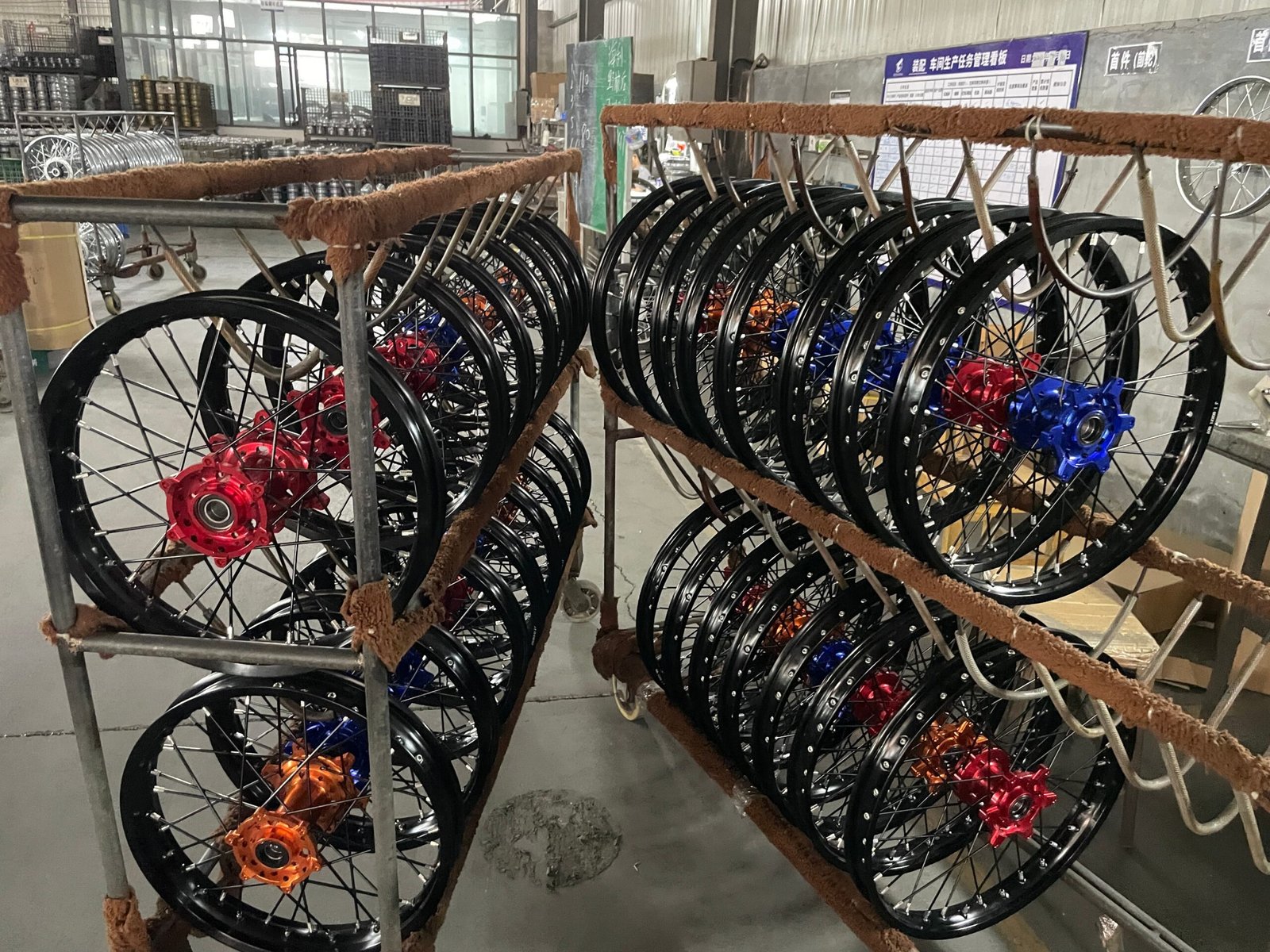
Forged vs Cast vs Laced: Side-by-Side Comparison
The table below summarizes the practical trade-offs from a sourcing and stocking point of view.
| Factor | Forged | Cast | Laced (Spoked) |
|---|---|---|---|
| Process | Billet compressed under pressure, then CNC-machined | Molten metal poured into a mold | Rim, hub & spokes assembled and tensioned |
| Material | 6061-T6 aluminum (or magnesium for race) | Aluminum alloy | Aluminum / steel rim with spokes |
| Relative weight | Lightest | Heaviest | Moderate |
| Strength & durability | Highest (aligned grain flow) | Good for standard use | Flexible, impact-absorbing, rebuildable |
| Customization | Widest (sizes, spoke patterns, one-offs) | Limited to available molds | Rim widths, colors, hub/spoke options |
| Relative unit cost | Highest | Lowest at volume | Mid to high (labor-intensive) |
| Best order volume | Low–mid, custom-driven | High volume | Niche / specialty volume |
| Ideal applications | Sportbikes, premium cruisers, track | Mass-market street, scooters, value lines | Adventure, dual-sport, scrambler, classic, cruiser |
| Typical buyer & margin | Performance/premium — highest margin per unit | Price-driven — thinner margin, high turnover | Specialty — strong margin in the right niche |
Which Wheel Type Fits Which Bike (and Buyer)
Matching construction to your customer base keeps inventory moving:
- Sportbike & track riders — forged is the default. Weight reduction improves acceleration, braking, and handling, and these buyers pay for it.
- Cruiser & bagger builders — forged for premium billet styling and big-diameter front wheels; cast for value-focused lines.
- Adventure & dual-sport — laced wheels for impact resistance and field repairability, with tubeless options for touring.
- Scooter & commuter / mass market — cast wins on cost; forged is an upsell for enthusiasts.
- Classic, café racer & scrambler — laced for authentic style; forged for a modern lightweight twist.
Which Type Is More Profitable to Stock?
There’s no single answer — it depends on your channel. Forged wheels carry the highest margin per unit and appeal to buyers who decide on performance and looks rather than price, which makes them ideal for custom and private-label programs. Cast wheels win on turnover: lower margins, but fast-moving in price-sensitive markets. Laced wheels are a focused, high-value niche where adventure and heritage demand is strong and competition is thinner. Many of our B2B partners run a forged + laced premium line alongside a cast value line to cover both ends of the market from one supplier.
What to Prepare Before You Inquire
To get an accurate quote fast, have these ready when you contact us:
- Bike model & year (or intended application)
- Wheel size × width, front and rear
- Offset / center distance
- Axle diameter
- Brake disc PCD and single- vs dual-sided swingarm (if known)
- Construction preference: forged, cast, or laced
- Quantity and destination port
Why Source Forged, Cast & Laced Wheels from FLEXIMOTO
FLEXIMOTO (FlexiTech International LLC) is a real manufacturer — not a trading company — running in-house forging and CNC machining in Shapingba District, Chongqing, China. We produce forged, cast, laced, and magnesium-forged motorcycle wheels in 6061-T6 aluminum and magnesium alloy, all under one roof, so you can stock multiple construction types and price tiers from a single source. We also supply matching swingarms, CNC billet parts, and Grade 5 titanium hardware, which lets builders and brands keep one consistent style across a whole project.
Our OEM/ODM service confirms every design with a 3D rendering before mass production, we return quotes within 48 hours, and we handle export-grade packaging and global logistics to the US, EU, and Australia (EXW / FOB / CIF, HS 8714.10). Our MOQ is flexible — we can start from a single set — with samples in around 30 days and production in roughly 30–45 days. Learn more about our approach on why FLEXIMOTO.
FAQ
Which wheel type is the cheapest to stock in volume?
Cast wheels. Once tooling is amortized across a high-volume run, casting gives the lowest unit cost, which suits price-sensitive, mass-market street and scooter lines. Forged and laced sit higher because they involve more material, machining, or hand labor.
Are forged wheels worth the higher price for my customers?
For performance and premium buyers, yes. Forged wheels are the lightest and strongest option, improving acceleration, braking, and handling, and they carry the highest margin per unit — so they fit sportbike, track, and high-end custom programs well.
Can you supply tubeless laced wheels for adventure bikes?
Yes. We make laced (spoked) wheels including tubeless options suited to adventure and dual-sport touring, where impact resistance and field repairability matter. Send us the bike model and target rim sizes for a fitment-specific quote.
What’s your MOQ?
Our MOQ is flexible — we can start from a single set, so you can test a new line without committing to a large run. Contact us with your model and quantity and we’ll confirm the best terms, including mixed-spec options for distributors.
How long is the lead time?
Samples typically take around 30 days, and mass production runs about 30–45 days depending on volume and finish. As an in-house forging and CNC factory we control scheduling directly, and we confirm every design with a 3D rendering before mass production to avoid rework.
Can I order forged wheels and matching swingarms from you?
Yes. Alongside forged, cast, and laced wheels, we supply swingarms, CNC billet parts, and Grade 5 titanium hardware, so you can source a complete, style-matched build from one factory and consolidate shipping.
Get a Quote for Your Build
Ready to stock or build? Send us a quick spec and we’ll return a quote within 48 hours. Please include: Bike model & year · Wheel size × width (front & rear) · Axle diameter · Quantity · Destination port · Email.
Email jackie.wei@fleximotoracing.com or request an OEM/ODM quote via our OEM & ODM service.