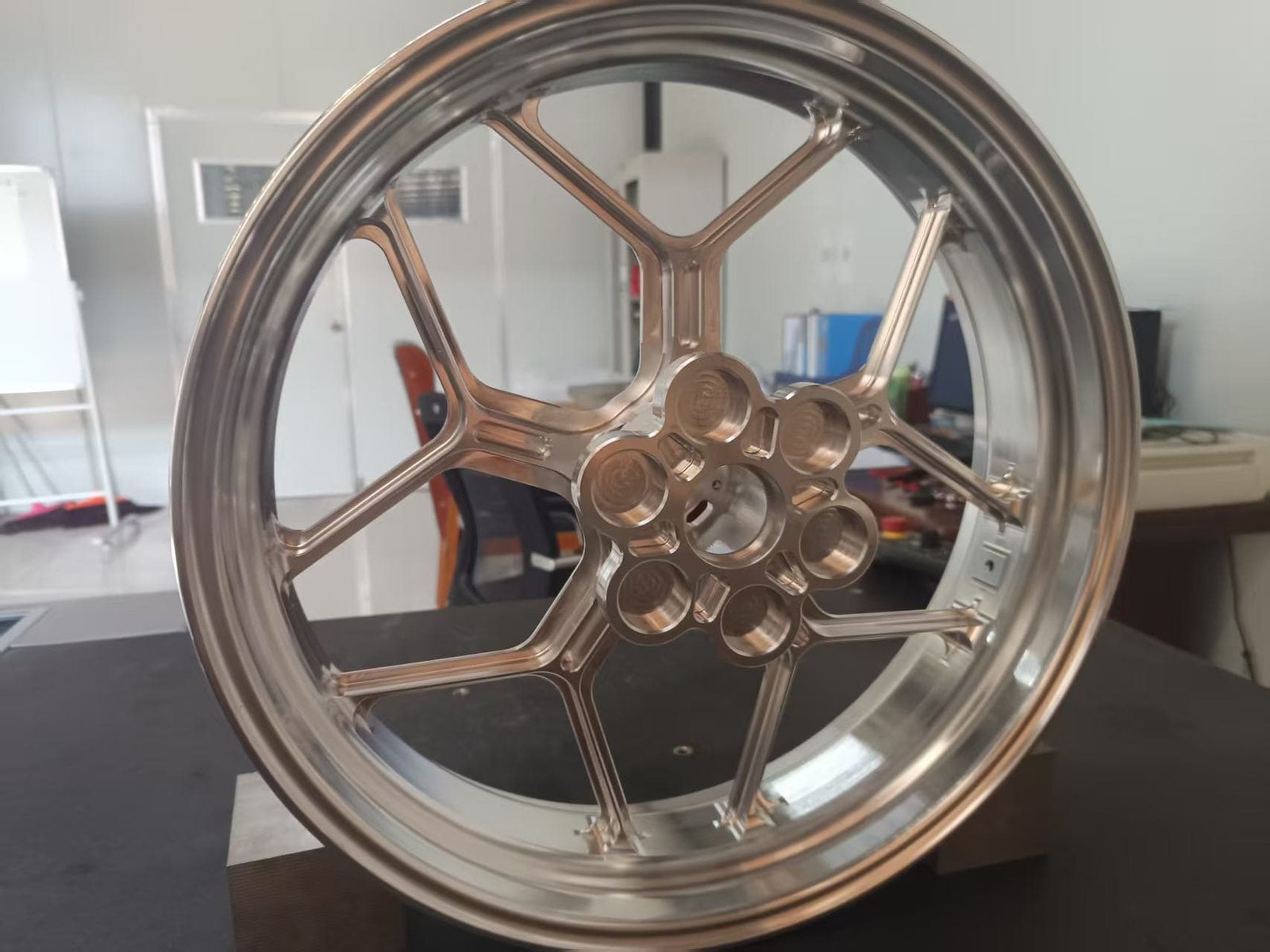
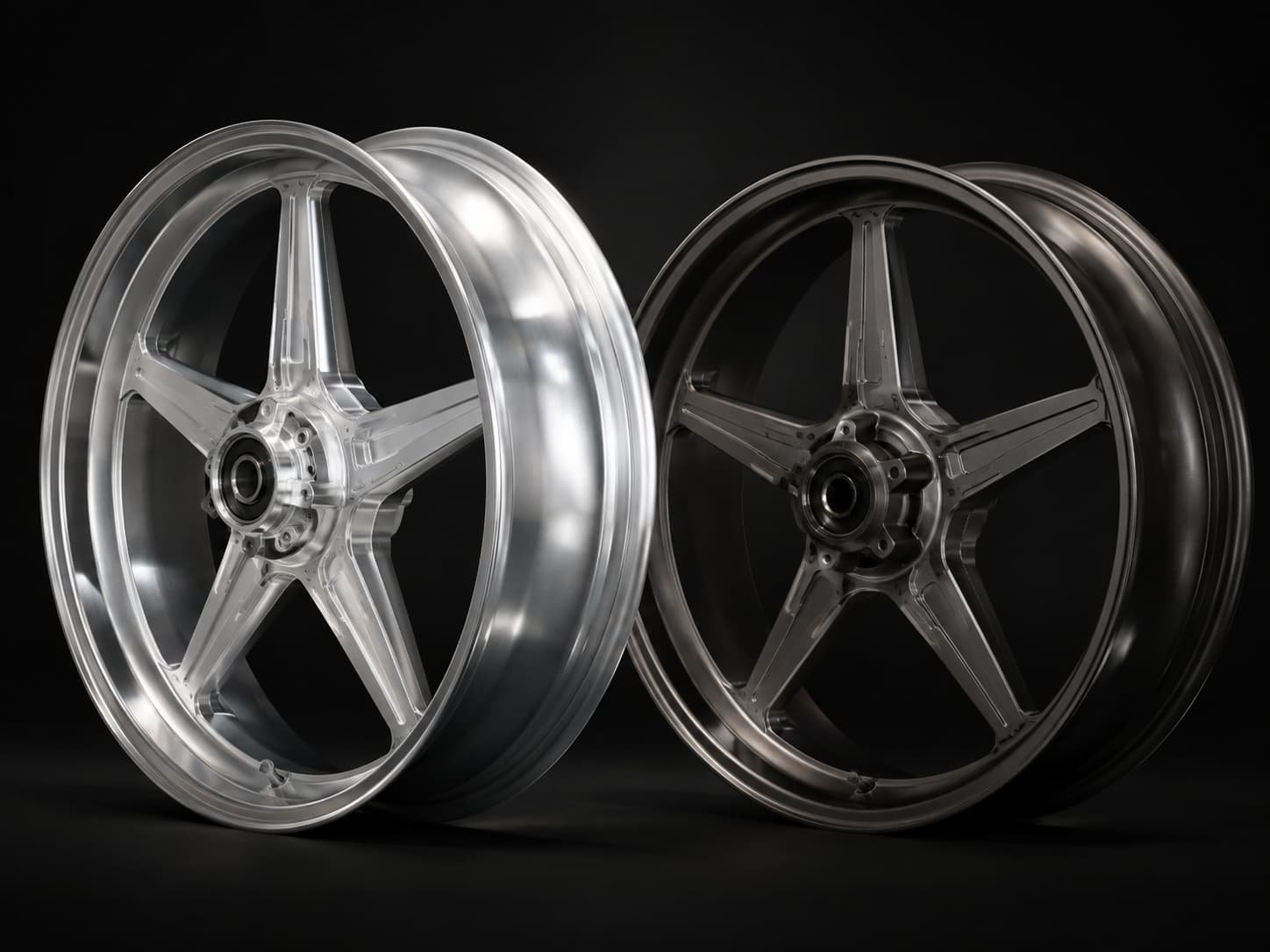
For most street, touring and dealer-stock programs, 6061-T6 forged aluminum is the correct motorcycle wheel material; forged magnesium is a specialist race and premium-build material that typically saves another 15–25% of wheel weight in exchange for higher cost, a mandatory multi-layer protective coating, and much stricter maintenance. Both are forged, both are light, and both can be machined to the same fitment — but they behave very differently once the wheel leaves the factory. This guide breaks down the property data, the real cost drivers, and which material to specify for which customer.
The Short Answer (TL;DR)
6061-T6 aluminum is denser than magnesium but far more corrosion-tolerant, easier to finish, cheaper to produce, and far more forgiving in daily use — which is why it accounts for the majority of forged motorcycle wheels sold worldwide. Forged magnesium alloys such as ZK60A-T5 and AZ80A-T5 are roughly a third less dense than aluminum and offer much higher vibration damping, so they deliver the lowest achievable unsprung and rotating mass in a metal wheel. The trade-off is that magnesium is chemically reactive: it must be conversion-coated and sealed, it corrodes quickly if the coating is chipped, and it is usually positioned as a track, race or show-build product rather than an all-weather street part. If you are stocking wheels for general dealers, specify 6061-T6. If you are supplying race teams, premium custom shops or a halo product line, offer magnesium as a paid upgrade.
Quick Definition: What “Forged” Means for Both Materials
A forged wheel starts as a solid billet of 6061 aluminum or magnesium alloy that is heated and press-formed under high pressure, then heat treated and fully CNC machined to final geometry. Forging aligns the grain flow of the metal along the shape of the spokes and rim, producing a denser, more uniform structure than casting, with no gas porosity. Forging is a process; 6061-T6 and magnesium are materials. You can forge either one — the material choice decides weight, durability and cost, while the forging process decides structural quality.
Technical Breakdown
Density and achievable wheel weight
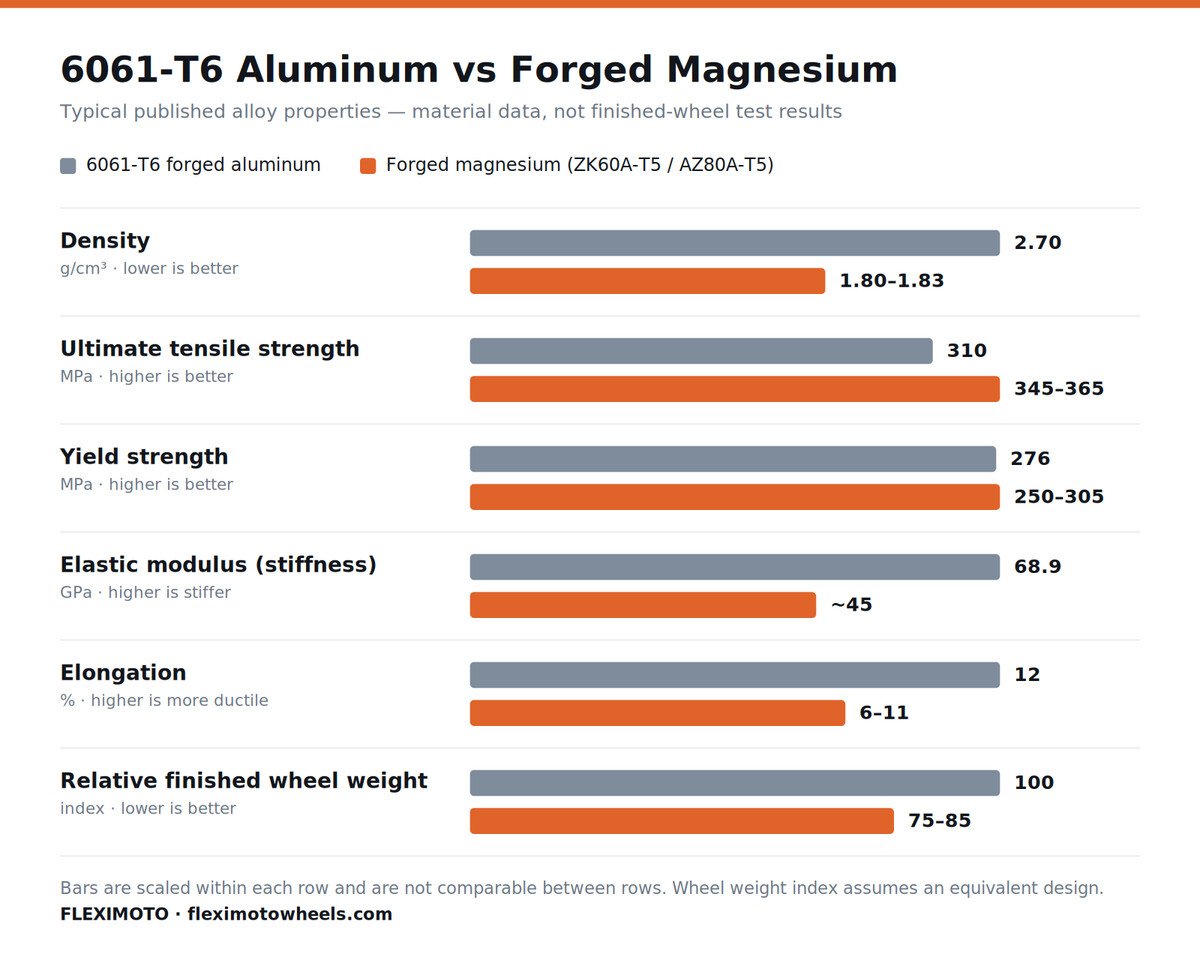
6061 aluminum has a density of about 2.70 g/cm³. Common wrought magnesium forging alloys sit around 1.80–1.83 g/cm³ — roughly 33% lighter by volume. In practice the finished wheel does not get 33% lighter, because magnesium’s lower stiffness usually requires thicker sections in the spokes and rim flange. Across typical sportbike and cruiser geometries, a magnesium wheel comes out around 15–25% lighter than the same design in 6061-T6. Exact figures depend entirely on the design, so we calculate the mass from the confirmed 3D model before production rather than quoting a generic number.
Strength, yield and stiffness
Published values for 6061-T6 are approximately 310 MPa ultimate tensile strength, 276 MPa yield strength and 12% elongation, with an elastic modulus near 68.9 GPa. ZK60A-T5 magnesium reaches roughly 365 MPa tensile and 305 MPa yield, and AZ80A-T5 roughly 345 MPa tensile and 250 MPa yield. So magnesium is not “weaker” in absolute tensile terms — and on a strength-to-weight basis it is clearly ahead. The important difference is stiffness: magnesium’s elastic modulus is only about 45 GPa, around two thirds that of aluminum, so a magnesium wheel deflects more under the same load and the designer must add material back to restore rim rigidity.
Fatigue behaviour and impact tolerance
6061-T6 has higher ductility and elongation, which means it tends to deform before it fractures — a pothole strike often produces a bent, visibly out-of-round rim. Magnesium alloys are less ductile and are more sensitive to notches, surface damage and stress concentrations, so a severe impact is more likely to crack than to bend. Neither material should be straightened and returned to service after a hard hit; for magnesium in particular, any crack, deep gouge or heat exposure means the wheel is scrap. This is the single biggest reason magnesium is a poor fit for rough roads, heavy touring loads and general dealer stock.
Vibration damping
Magnesium has substantially higher inherent damping capacity than aluminum — it absorbs and dissipates vibration energy rather than transmitting it. Riders describe magnesium wheels as feeling less harsh over sharp edges. It is a genuine advantage, but it is a refinement benefit rather than a safety or durability benefit, and it matters most to track and premium customers who will actually notice it.
Corrosion and surface protection
This is where the two materials diverge most. Aluminum forms a stable, self-repairing oxide layer, so a 6061-T6 wheel is already reasonably corrosion-tolerant before finishing, and anodizing, powder coat, polishing or PVD are chosen mainly for appearance. Magnesium is highly anodic — it sits near the reactive end of the galvanic series — and will corrode rapidly when exposed to moisture, road salt or dissimilar metals. A magnesium wheel therefore requires a full protective system: chemical conversion coating, primer, topcoat and a sealed clear layer, with careful isolation at bearing bores, valve holes and any steel hardware contact point. That coating is not cosmetic; it is structural protection, and it must be repaired the moment it is chipped.
Cost drivers
Magnesium billet costs more per kilogram than 6061, the forging and machining windows are tighter (magnesium chips must be handled and stored with fire-safety controls), scrap tolerance is lower, and the mandatory multi-layer coating adds process steps that anodized aluminum does not need. Combined, this makes a magnesium wheel set materially more expensive than the same design in 6061-T6. The exact difference depends on diameter, width, spoke geometry and finish, which is why we price it per project rather than by a fixed multiplier — you can see the full list of variables in our forged motorcycle wheels overview.
6061-T6 vs Magnesium: Side-by-Side Comparison
| Property | 6061-T6 forged aluminum | Forged magnesium (ZK60A-T5 / AZ80A-T5) |
|---|---|---|
| Density | ~2.70 g/cm³ | ~1.80–1.83 g/cm³ |
| Ultimate tensile strength | ~310 MPa | ~345–365 MPa |
| Yield strength | ~276 MPa | ~250–305 MPa |
| Elongation | ~12% | ~6–11% |
| Elastic modulus (stiffness) | ~68.9 GPa | ~45 GPa |
| Typical finished wheel weight | Baseline | ~15–25% lighter on an equivalent design |
| Vibration damping | Low | Substantially higher |
| Impact failure mode | Tends to bend / deform | More likely to crack; notch sensitive |
| Corrosion resistance | Good; self-passivating oxide | Poor if uncoated; highly anodic |
| Finish system | Anodize, powder coat, polish, PVD — cosmetic choice | Conversion coat + primer + topcoat + sealed clear — mandatory |
| Maintenance demand | Normal cleaning | High; coating damage must be repaired immediately |
| Relative cost | Baseline | Significantly higher |
| Best fit | Street, touring, cruiser, scooter, dealer stock | Race, track days, premium and show builds |
Property values above are published typical figures for the alloys and tempers named; they describe the material, not a specific finished wheel. Wheel-level weight and dimensional data are confirmed per design.
How This Affects Your Fitment, Cost and Customers
Material choice does not change fitment geometry. Wheel diameter, rim width, offset, axle diameter, brake disc PCD, ABS ring position and sprocket-side clearance are all set by the bike, and we machine both materials to the same confirmed dimensions. What changes is the commercial and after-sales picture:
| Customer / use case | Recommended material | Why |
|---|---|---|
| General dealer stock, daily riders, touring | 6061-T6 | All-weather durability, lower price point, fewer warranty and care issues |
| Cruiser and custom street builds | 6061-T6 | Wide finish range, heavier loads, long outdoor exposure |
| Scooter and commuter programs | 6061-T6 | Price sensitivity and high-mileage urban use |
| Track-day and club racing | Magnesium (or 6061-T6 for a budget tier) | Lowest rotating mass; wheels live in controlled conditions |
| Professional race teams | Magnesium | Weight and damping outweigh service life |
| Halo / premium showroom line | Magnesium | Differentiates the top of your range and lifts average order value |
Magnesium ownership notes to pass on to your customers
- Wash with pH-neutral cleaner only — no acidic or alkaline wheel cleaners, no aggressive degreasers.
- Inspect the coating regularly, especially around the valve hole, bearing bores and rim edges.
- Repair any chip, scratch or stone strike that breaks the coating without delay.
- Avoid prolonged exposure to road salt, and rinse thoroughly after wet-weather use.
- Do not straighten, weld or heat a damaged magnesium wheel — replace it.
- Use the specified spacers and hardware; direct steel-to-magnesium contact invites galvanic corrosion.
Standards and Certifications: Mandatory vs Optional
Requirements are regional, and they attach to the market you import into rather than to the material itself:
- Japan — JWL / VIA: JWL is the mandatory marking for light alloy wheels in the Japanese market; VIA is a voluntary third-party verification widely treated as the commercial benchmark. Most Asian buyers ask about these first.
- United States — DOT / FMVSS: US federal motor vehicle safety standards cover rim marking and dimensional requirements; wheels are also subject to NHTSA importer obligations. Confirm the current applicable requirement with your customs broker for your specific product.
- Europe — ECE / E-mark: there is no single UN regulation dedicated specifically to motorcycle wheels, so aftermarket wheels in Europe are commonly handled through national technical approval routes such as German part certification. Requirements vary by country.
- Australia — ADR: Australian Design Rules govern vehicle and replacement component compliance; check the applicable ADR with your local compliance agent.
- Magnesium specifically: in several markets magnesium wheels are marketed and sold as competition or track-use parts. Confirm the road-legal status in your destination market before committing to a magnesium SKU.
We will not claim approvals we do not hold. Tell us the destination market and the certification your customer requires, and we will confirm in writing what we can supply and what would need third-party testing arranged for your project.
How FLEXIMOTO Handles Both Materials
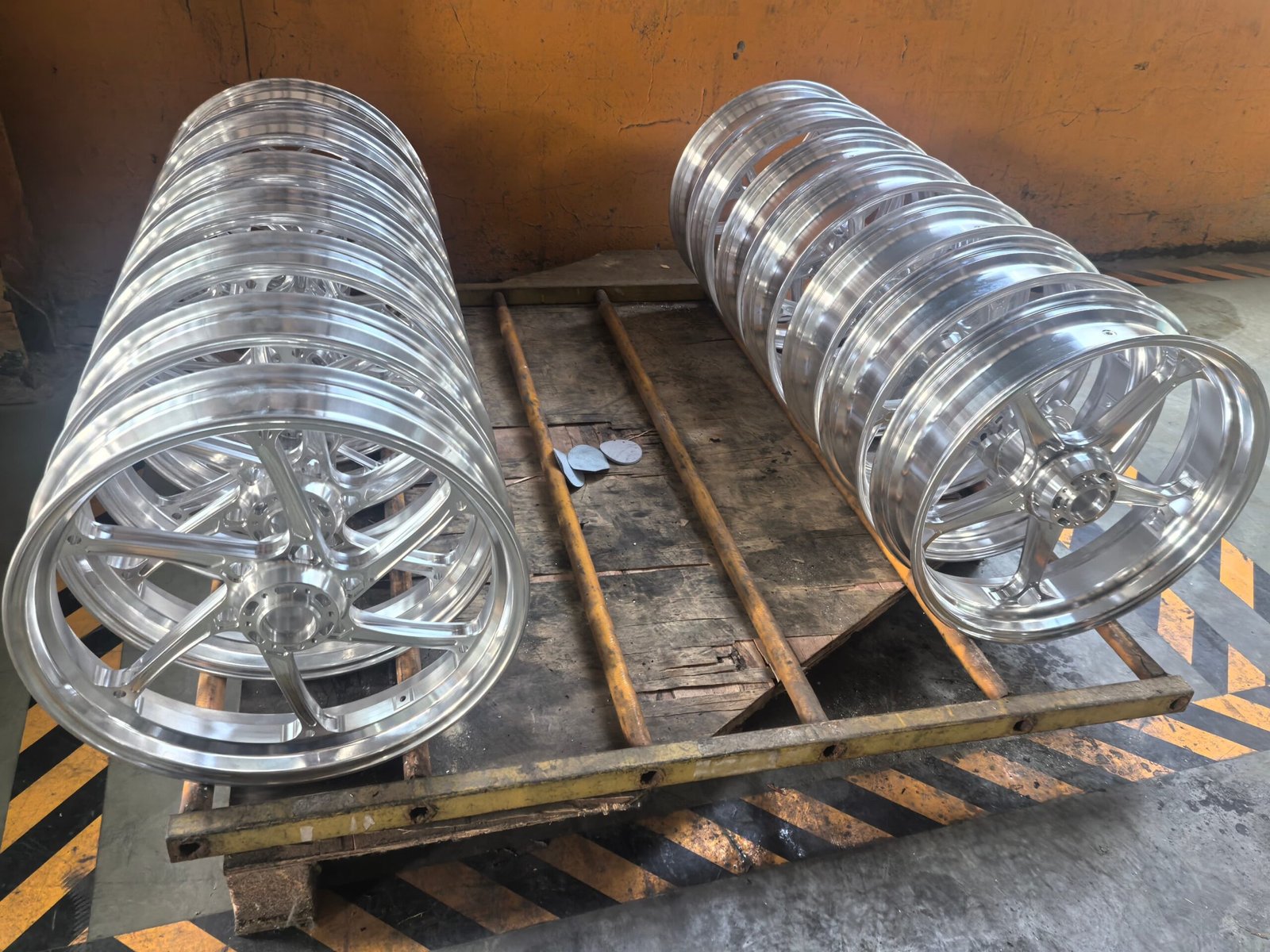
FLEXIMOTO (FlexiTech International LLC) manufactures in Shapingba District, Chongqing, China, on our own forging and CNC lines — we are a manufacturer, not a trading company, so material specification, machining tolerance and finishing are all controlled in house. For every project we confirm a 3D render with you before cutting metal, then run dimensional inspection, radial and lateral runout checks and balance testing, with final inspection before packing. You can review the process on our quality control page, and see the material and finish options for the lightweight tier on our magnesium forged motorcycle wheels page.
Commercial terms are the same for both materials: MOQ is one set (front and rear), sample lead time is 25–30 days, bulk production runs 30–45 days after sample approval, and quotations are returned within 48 hours. Magnesium projects add the protective coating stage, which we build into the confirmed schedule at quotation.
FAQ
Are magnesium wheels really that much lighter than forged aluminum?
Magnesium alloy is about 33% less dense than 6061 aluminum, but a finished wheel usually needs thicker sections to compensate for magnesium’s lower stiffness. In practice, expect around 15–25% lower wheel weight on an equivalent design. We calculate the exact mass from your confirmed 3D model before production.
Can I use magnesium motorcycle wheels on the street?
Mechanically yes, but it is not what we recommend for general street stock. Magnesium corrodes quickly once the protective coating is broken, it is less tolerant of pothole impacts, and in several markets it is sold as a competition part. For daily riding, touring and dealer inventory, 6061-T6 is the better commercial choice.
How do I maintain magnesium motorcycle wheels?
Wash with a pH-neutral cleaner only, rinse thoroughly after riding in rain or on salted roads, inspect the coating around the valve hole and rim edges regularly, and repair any chip or scratch immediately. Never straighten, weld or heat a damaged magnesium wheel — replace it.
How much more expensive are magnesium wheels than 6061-T6?
Materially more, but there is no fixed multiplier. The difference comes from billet cost, tighter forging and machining control, lower scrap tolerance and the mandatory multi-layer coating system. Send us the size, width and finish you need and we will quote both materials within 48 hours so you can compare directly.
What’s your MOQ and lead time for forged aluminum or magnesium wheels?
MOQ is one set, front and rear. Sample lead time is 25–30 days, and bulk production takes 30–45 days after sample approval. Magnesium projects include the additional protective coating stage within that confirmed schedule.
Do you supply test reports or certifications for these wheels?
Tell us your destination market and the standard your customer requires — JWL/VIA, DOT, ECE/E-mark, ADR or a customer-specific protocol — and we will confirm in writing what documentation we can provide and what would need third-party testing arranged for your project. We do not claim approvals we do not hold.
Get a Quote for Your Wheel Program
Send us the bike and target specification and we will quote both 6061-T6 and magnesium so you can compare weight, price and lead time side by side. Quotes are returned within 48 hours.
Please include:
- Bike model & year
- Wheel size × width (front & rear)
- Axle diameter
- Quantity
- Destination port
Email jackie.wei@fleximotoracing.com or call +86 23 6521 0107.