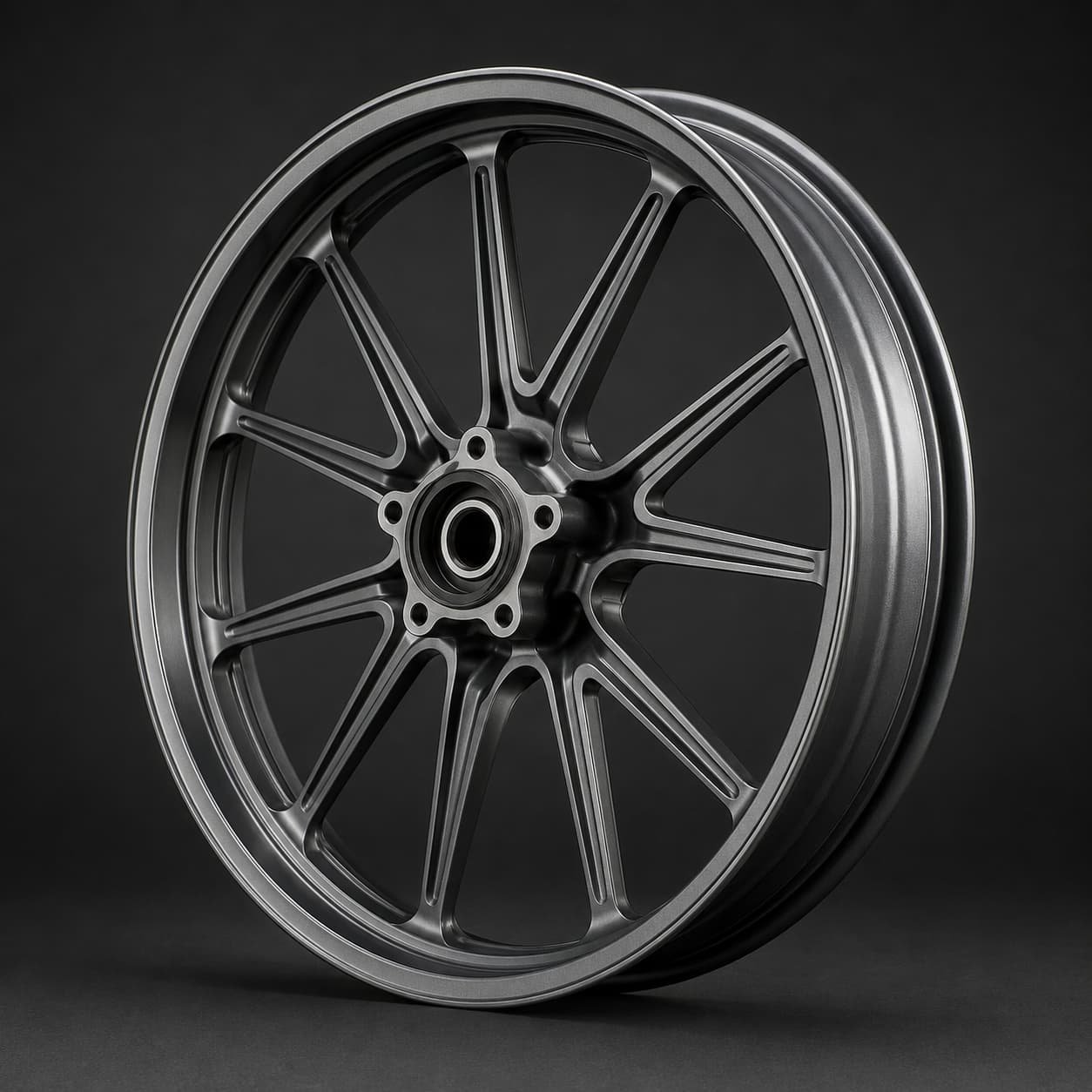
The cost of a custom motorcycle wheel is driven mainly by five things: diameter and width, material (6061-T6 aluminum vs. magnesium), surface finish, structural and spoke complexity, and landed cost (duties, freight, incoterms). Two wheels can look almost identical yet differ significantly in price because these factors stack—so a clear spec brief is the fastest way to get an accurate, low-surprise quote.
The Short Answer (TL;DR)
For a B2B buyer, a custom forged wheel price is built from the billet up: bigger and wider wheels use more material and machining time; magnesium carries a real premium over aluminum; multi-step and two-tone finishes cost more than single-color; intricate spoke patterns add CNC hours; and engraving or custom caps add labor. On top of the factory (EXW) price sit duties, freight and packaging, which decide your true landed cost. Control the first five and choose the right incoterm, and you control the price.
What Actually Drives the Price: The Cost Drivers Table
Rather than a single sticker number, think in cost drivers. Each one moves the price up or down, and they combine. Here is how they typically rank for a custom forged set:
| Cost Driver | What Pushes It Up | Relative Cost Impact |
|---|---|---|
| Diameter & width | Larger diameter (e.g. 21″ cruiser front), wider rims, mismatched front/rear sizes | Medium–High |
| Material | Magnesium forged vs. 6061-T6 aluminum baseline | High |
| Surface finish | Two-tone, polish, PVD, multi-step vs. single-color powder/anodize | Medium–High |
| Spoke / structural design | Intricate patterns, deep dish, extra lightening pockets, more CNC time | Medium |
| Engraving & custom parts | Logo engraving, custom center caps, matched hardware | Low–Medium |
| Tooling & setup (one-time) | Brand-new fully custom design, low order volume | Medium (amortized by volume) |
| Certification & testing | Third-party test reports / documentation (JWL, VIA, DOT, ECE) | Medium |
| Landed cost | Import duties, freight, incoterm (EXW/FOB/CIF), export packaging | Varies by destination |
1. Size & Width
Every custom wheel starts as an aluminum or magnesium billet, so physical size is the first cost lever. A larger diameter and a wider rim mean more raw material and more machining time to cut it to shape. Wide rear rims and big cruiser front wheels (up to 21″ and beyond) sit at the top of this scale, while compact scooter and sportbike sizes sit lower. Mismatched front/rear sizes on a single build also add setup, because each wheel is programmed and machined separately. If you are comparing quotes, always compare like-for-like diameters and widths.
2. Material: 6061-T6 Aluminum vs. Magnesium
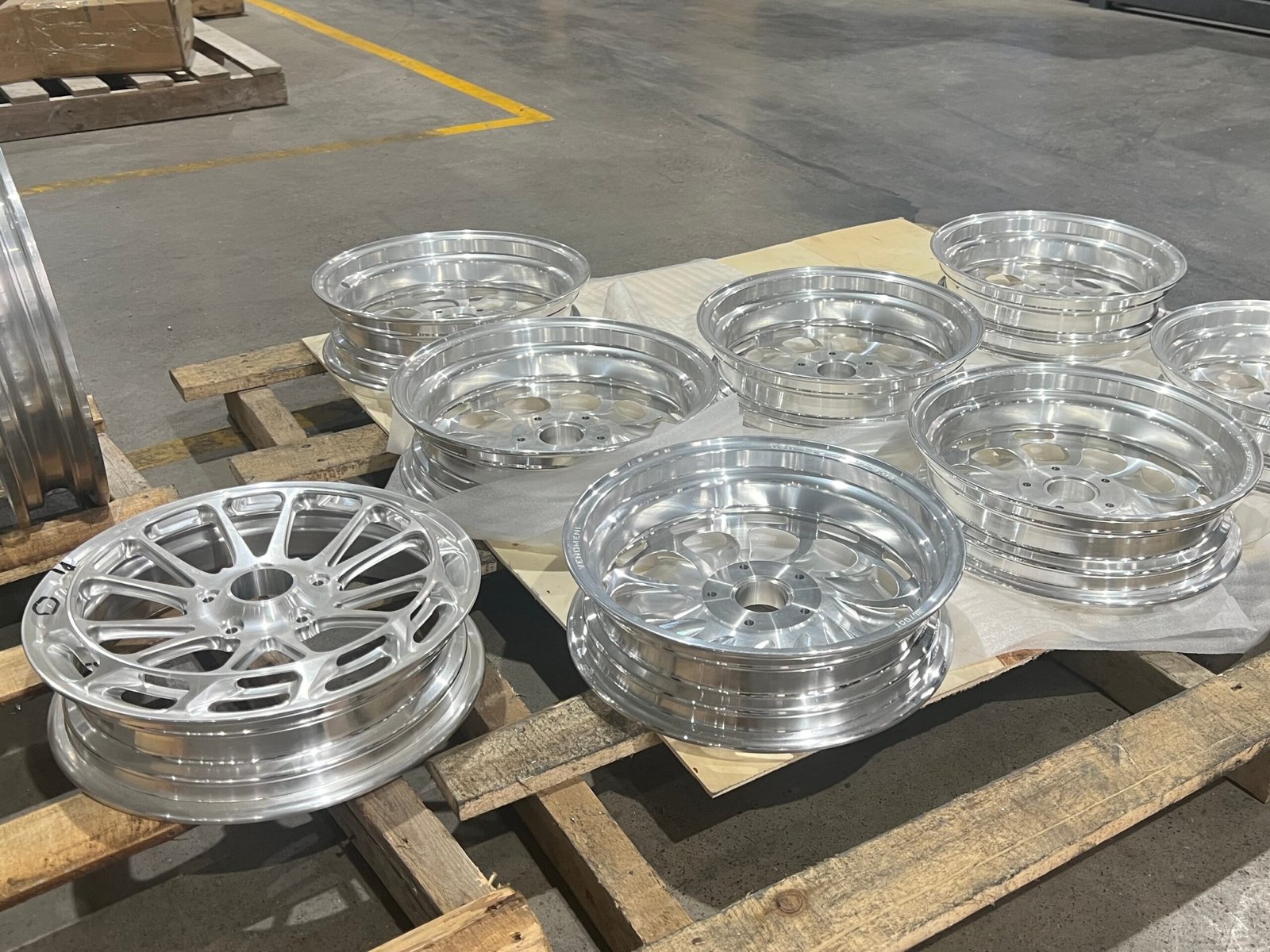
Material is often the single biggest swing in price. 6061-T6 aluminum is the cost baseline—strong, durable, road-friendly and the standard choice for most dealer and distributor inventory. Magnesium forged wheels carry a clear premium, because the raw material itself costs more, the forging and handling are more specialized, and magnesium requires protective coating to resist corrosion. Magnesium earns its place on race and high-performance builds where every gram of unsprung weight matters, but for most street inventory, aluminum is the value-per-set winner. You can compare the two options directly on our magnesium forged wheels and forged aluminum wheels pages.
3. Surface Finish: The Cost Ladder
Finish is where two visually similar wheels quietly diverge in price. Think of it as a ladder from simplest to most involved:
- Single-color powder coat or anodize — the most cost-efficient, durable, and popular for volume inventory.
- Machined / brushed accents — adds a machining pass but stays moderate.
- Two-tone and custom colors — masking, multiple coats and extra labor step the cost up.
- Polish and mirror finishes — labor-intensive hand and machine work.
- PVD / chrome-like — a specialized, premium process at the top of the ladder.
Choosing a single-color finish for the bulk of a range—and reserving premium finishes for a hero SKU—keeps your average cost down without limiting the look of your catalog.
4. Structural & Spoke Complexity
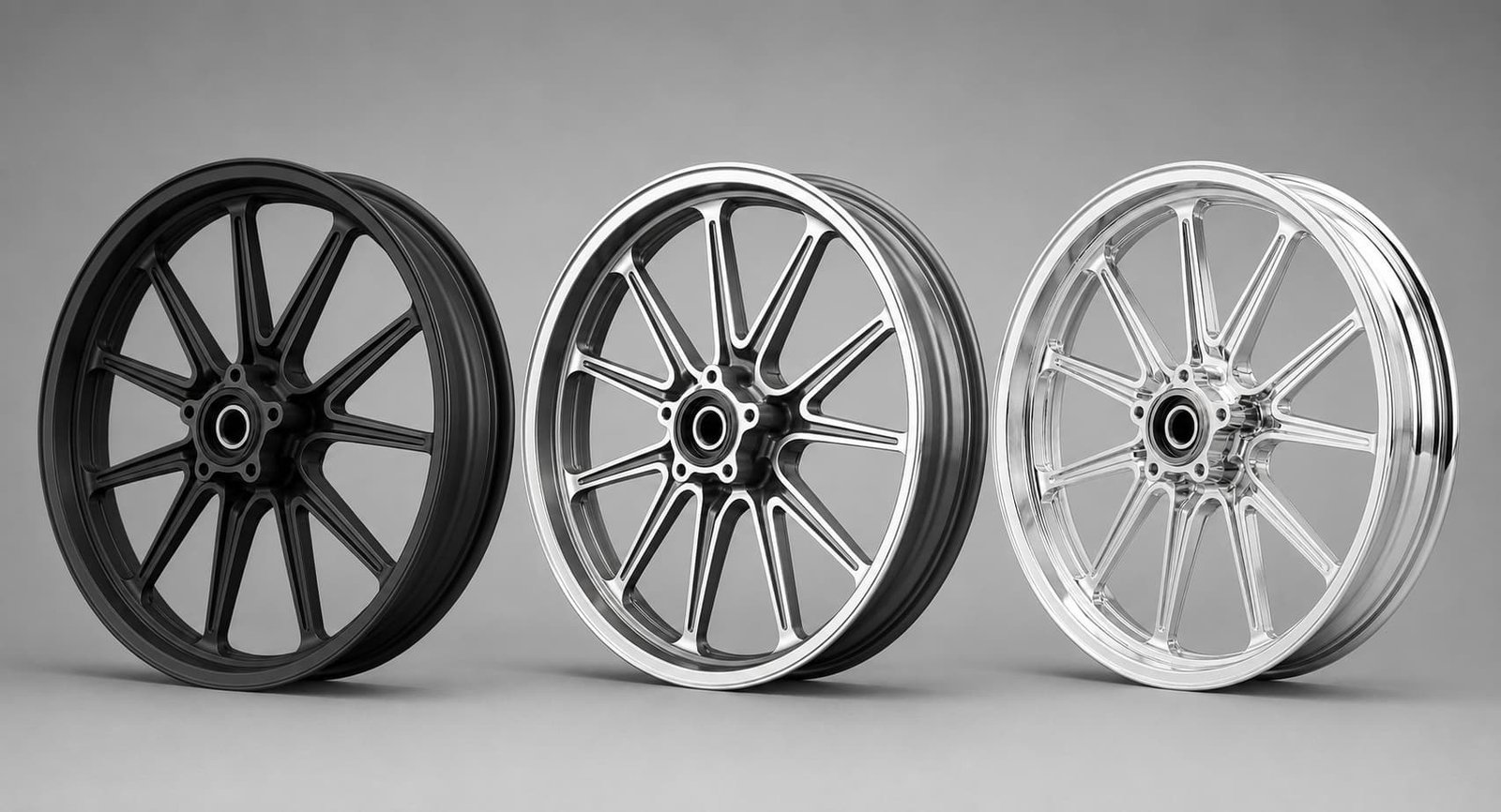
The spoke design is not just style—it is machining time. A clean 5-spoke pattern is faster to cut than an intricate 10-spoke, deep-dish, or heavily pocketed design. More faces, tighter radii and additional lightening cuts all add CNC hours per wheel. If your target price point is tight, a simpler, proven spoke design gives you a strong-looking wheel at a lower machining cost, and you can still differentiate through finish and engraving.
5. Engraving, Center Caps & Custom Parts
Personalization is usually a smaller line item, but it is real. Laser engraving your brand or model name, custom center caps, matched valve stems and coordinated hardware each add a step. These are exactly the touches that turn a generic wheel into a private-label product, so the cost is often worth it for brand buyers. If you are building a branded line, see how we handle logo marking and packaging on our OEM / ODM service page.
6. Tooling, Volume & Certification
A brand-new fully custom design carries one-time engineering: CAD, CNC programming and a first sample. That cost is fixed, so it weighs more heavily on a tiny order and much less as volume rises—which is why per-unit price drops as you scale. Reusing a proven design across several bike models spreads that setup even further. Separately, if your market requires third-party test reports or specific certification documentation, testing and paperwork add cost; it is worth confirming exactly what your destination market mandates before you request it.
7. Landed Cost: Duties, Freight & Incoterms
The factory (EXW) price is not your final number. Motorcycle wheels and parts fall under HS code 8714.10, and your real cost to the door depends on import duty rates in your market, freight, export packaging and the incoterm you choose (EXW, FOB or CIF). Consolidating wheels with other parts into one shipment and picking the right incoterm can noticeably reduce your per-set landed cost. Our export-grade packing and worldwide shipping to the US, EU and Australia are covered on the packaging & shipping page.
How to Keep Custom Wheel Cost Under Control
- Default to 6061-T6 aluminum unless a build genuinely needs magnesium.
- Use single-color finishes for volume SKUs; save polish/PVD for hero models.
- Pick a proven spoke design and reuse it across models to spread tooling.
- Order in volume to amortize one-time setup over more units.
- Consolidate shipments and choose the incoterm that fits your logistics.
- Send a complete spec brief up front so the quote is accurate the first time.
What to Prepare Before You Ask for a Quote
An accurate custom wheel quote depends on a clear brief. Have these ready:
- Bike model & year
- Wheel size × width (front & rear)
- Offset and axle diameter
- Material (6061-T6 aluminum or magnesium)
- Finish / color and any engraving
- Quantity (sets)
- Destination port and preferred incoterm
Why Source from FLEXIMOTO
FLEXIMOTO is a manufacturer, not a trading company. We run our own forging and CNC lines in Chongqing, China, which means we control the cost drivers above directly—material, machining, finish and marking—rather than marking up someone else’s price. We support OEM/ODM private-label programs, return quotes within 48 hours, and can supply wheels alongside swingarms, CNC billet parts and Grade 5 titanium hardware in a single consolidated shipment, so you save on both freight and coordination.
FAQ
Why do two wheels that look almost the same cost so differently?
Because the cost is in the details you can’t always see: material grade, finish process, spoke machining time, engraving and testing. A single-color aluminum wheel and a two-tone magnesium wheel of the same size can differ significantly even though the shape looks similar.
Is magnesium worth the extra cost?
For race and high-performance builds where minimizing unsprung weight is the priority, yes. For most street inventory, 6061-T6 aluminum gives the better value per set with excellent strength and durability, so we usually recommend aluminum unless the build specifically calls for magnesium.
Does ordering more sets lower the price per wheel?
Yes. One-time tooling and setup are fixed costs, so spreading them across a larger order lowers the per-unit price, and larger runs are generally more cost-efficient to produce. Our MOQ is just one set (front and rear), so you can start small; share your target quantity and we’ll show you where the price breaks fall.
What’s the difference between an EXW, FOB and CIF price?
EXW is the factory-gate price with no freight or duties included; FOB adds getting the goods loaded at the port of origin; CIF adds sea freight and insurance to your destination port. Duties are always paid by the importer. The right choice depends on how much of the logistics you want to manage yourself.
Do you charge separately for custom design or tooling?
A brand-new fully custom design carries one-time engineering and sampling. That cost is fixed and is amortized over your order volume, so it weighs less per unit as quantity rises. Reusing a proven design avoids most of it.
How fast can I get a cost estimate?
We return quotes within 48 hours once we have your spec brief—bike model, wheel size and width, offset and axle, material, finish, quantity and destination port. Sample lead time is 25–30 days.
Get a Quote for Your Build
Send us your spec brief and we’ll come back within 48 hours with a clear, itemized price—no surprises. Include:
Bike model & year · Wheel size × width (F&R) · Axle diameter · Quantity · Destination port · Email
Email jackie.wei@fleximotoracing.com or start a custom order through our forged motorcycle wheels page.